






What are predictive IT operations?
Predictive IT operations uses AI, machine learning, and real-time operational context to identify risk patterns and leading indicators before they cause incidents, shifting IT teams from reactive firefighting to proactive prevention. Also called predictive AIOps or predictive ITOps, it’s a core capability of modern Agentic ITOps platforms.
Traditional monitoring tools tell you something broke. Predictive IT operations tells you something is about to break, before end users notice and before your on-call queue lights up. It works by analyzing real-time telemetry, historical incident patterns, and change records together so AI can surface leading indicators rather than lag indicators. For how predictive capabilities fit into the broader category, see What Is an AIOps Platform?
The operational stakes make this worth understanding clearly. Enterprise Management Associates (EMA) puts the cost of unplanned downtime for large enterprises at an average of $23,750 per minute. End users still report 65% of all incidents, often before telemetry does, despite year-over-year increases in observability and ITSM spending. EMA also found that 43% of respondents say prioritization and routing most needs improvement, which is the gap earlier warning helps close.
Why predictive IT operations matters
Alert volumes in hybrid-cloud environments have scaled past what any human team can triage manually. The noise isn’t a workflow problem; it’s a math problem. When a single enterprise processes tens of millions of events annually, reactivity isn’t a strategy, it’s a liability.
The resilience argument is just as direct. Teams that predict and prevent incidents protect customer experience and SLA commitments. Teams that don’t spend their time explaining outages after the fact. Gartner’s finding that human-executed change is still the most significant contributor to IT outages (Gartner, ITSM Best Practices for Effective IT Change Management, December 2024) shows why prediction has to start at the change layer, not the alert layer.
How predictive IT operations works
The mechanics rest on three layers working together.
The data foundation
AI needs full operational context, not just alert volume. That means topology data, change records, past incident patterns, runbook knowledge, and the tribal knowledge that typically lives in people’s heads.
Risk detection and scoring
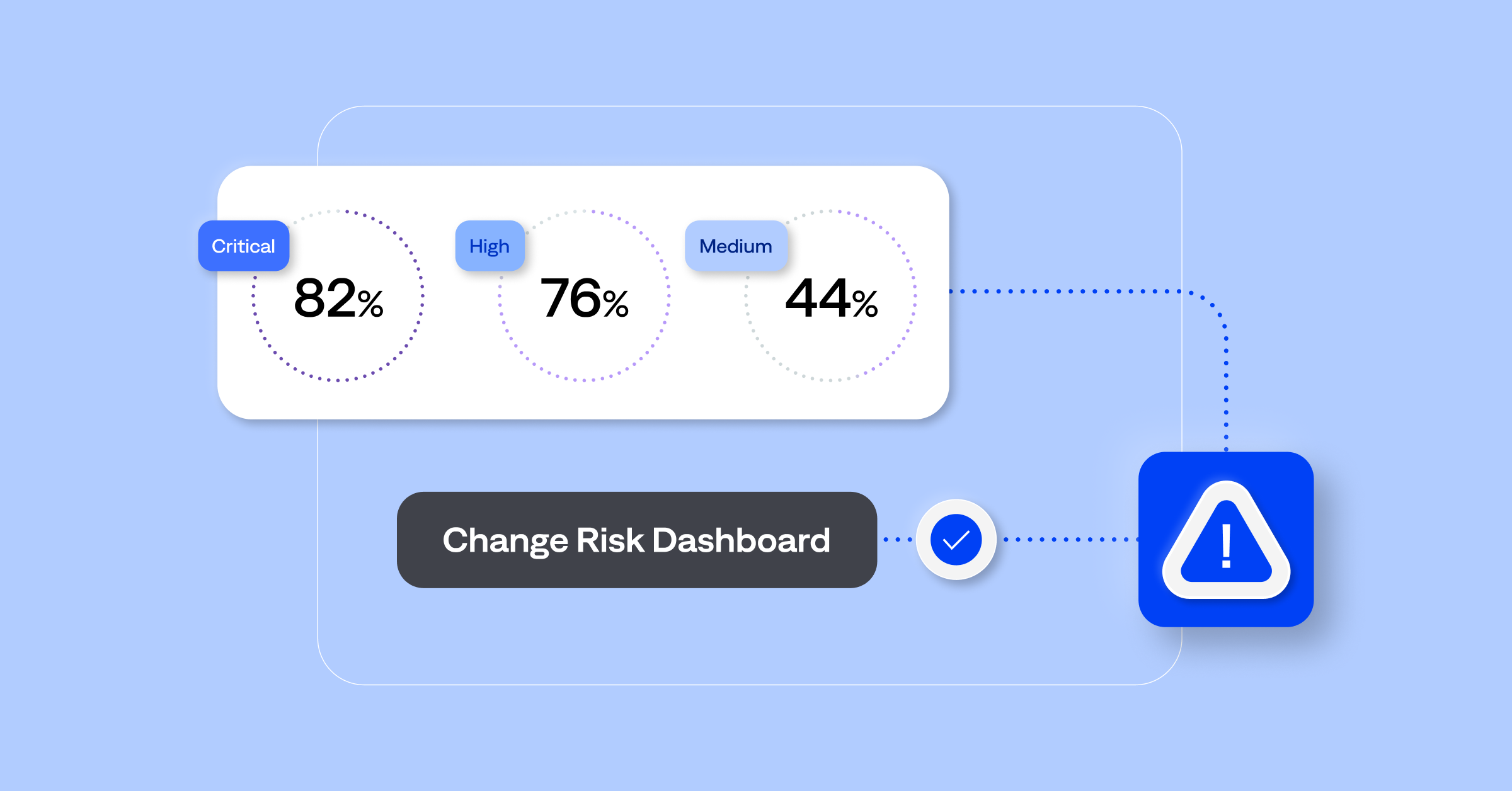
AI analyzes proposed changes and live signals against known risk patterns and historical incidents to produce risk scores before anything deploys.
Automated prevention and response
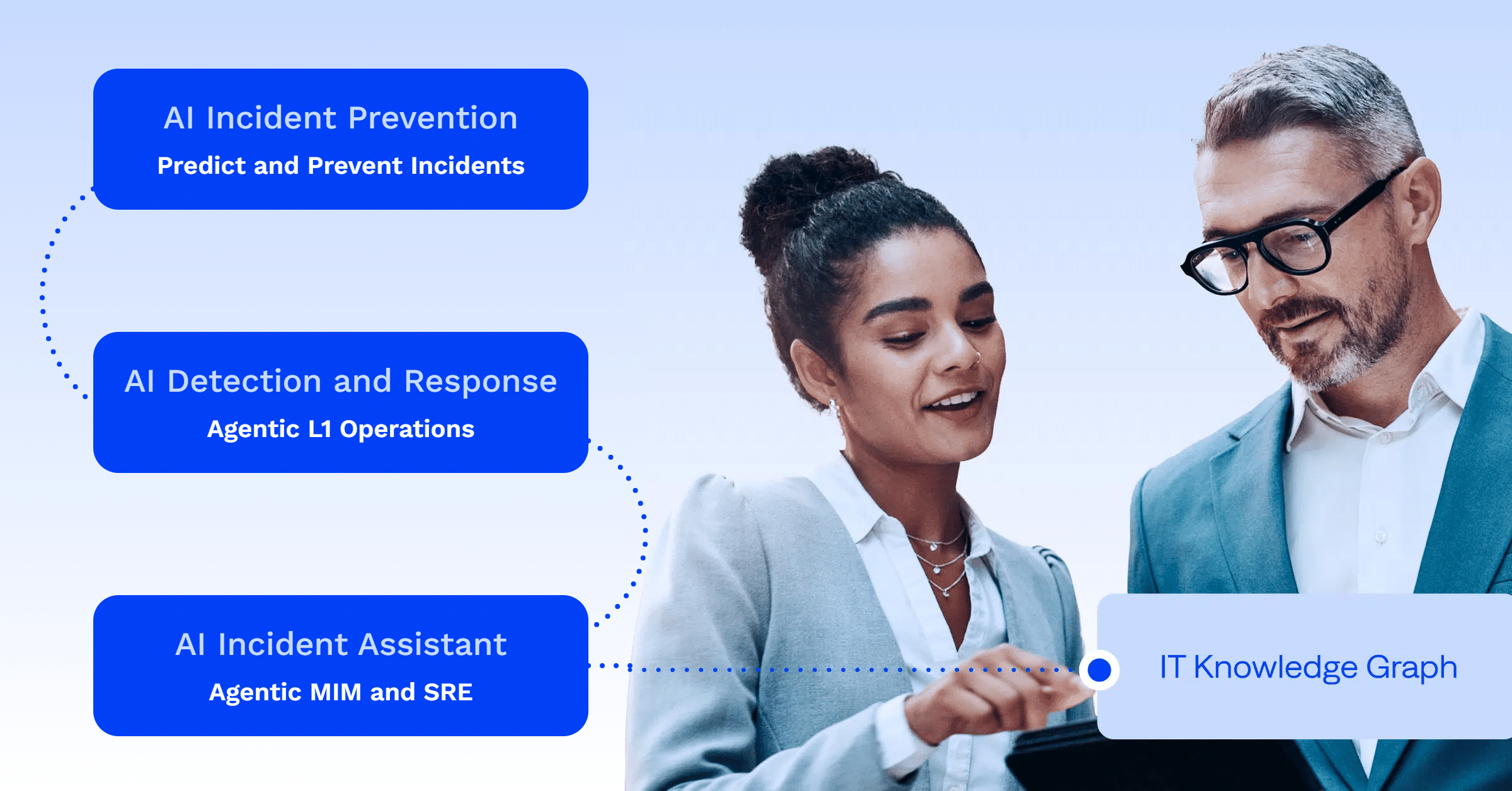
Prediction without action is still just a dashboard. Real value requires closing the loop across the full prevent, detect, triage, and resolve lifecycle. The distinction between layers two and three matters more than most teams expect. Surfacing a risk score is necessary; acting on it autonomously is what eliminates the 2am page. Predictive incident detection at the signal layer has to connect to automated response at the action layer, or you have built a better alarm system, not a prevention system.
IT Knowledge Graph: context that makes prediction real
The IT Knowledge Graph captures topology data, change records, historical patterns, and tribal knowledge even when the data is messy or incomplete. It improves as a byproduct of daily operations. No multi-year data cleanup required, and no need to perfect your CMDB before you start. The graph gets smarter with every incident it processes, which means your predictive accuracy compounds over time.
Predictive AIOps vs. reactive operations: what actually changes
The difference shows up most clearly at the point of a proposed change. In reactive operations, an engineer deploys an infrastructure change at 6pm, the change causes a cascading failure at 10pm, and someone gets paged at 2am to diagnose something that’s already affecting users. By the time you predict IT incidents reactively, you’re already in incident response mode.
Predictive AIOps changes that sequence. The same proposed change triggers a risk score before deployment, surfacing that a similar change pattern caused an outage in a related service last quarter, with a recommended mitigation attached. The change either gets adjusted or the team deploys with full situational awareness of the risk.
The broader contrast is structural. Reactive operations center on detection speed, manual triage, escalation queues, and post-incident blame cycles. Predictive operations center on leading indicators, automated triage, and AI-generated postmortem reports that feed back into future prevention.
Legacy predictive tools and why they fall short
First-generation predictive AI ITOps solutions made real progress on anomaly detection, but most hit a ceiling in three places.
Rules-based systems
Rules-based systems require engineers to define every threshold, which means they catch known failure patterns and miss novel ones. Modern hybrid-cloud environments change too fast for static rules to keep up.
CMDB dependence
Legacy tools assume clean, complete configuration data. Large enterprises rarely have that, and anyone who has spent time with a real enterprise CMDB knows how quickly it drifts from reality. Predictions built on incomplete topology data don’t just underperform; they erode trust in the tool.
The gap between prediction and action
A tool that surfaces a risk score but drops the alert into a human queue hasn’t solved the speed problem. If the response path is still manual, the latency of human triage negates much of the early warning value. That’s the limitation predictive AI needs to address if it’s going to close the gap between detection and resolution.
Real-world results from predictive IT operations
- Autodesk reduced incidents by 69% and significantly improved IT operational efficiency.
- A regulated healthcare enterprise cut change-related outages by 45% in a year by scoring change risk before deployment.
- A global hospitality corporation reduced change-caused incidents by 28% in a year, with only about 1% of its roughly 28,000 annual changes rated high risk.
How agentic AI changes predictive IT operations
Rules-based prediction follows a static path: if X, then Y. That works at modest scale. As alert volume and infrastructure complexity grow, the rules break down and the queue floods.
Agentic AI works differently. It reasons over the full operational context in the IT Knowledge Graph, works with incomplete or messy data instead of demanding a clean CMDB, and decides on its own when to resolve an incident versus when to escalate to a human.
Automating L1 reduces escalation volume and frees senior engineers for the work that actually needs them.
Frequently asked questions about predictive IT operations
What is the difference between predictive IT operations and traditional AIOps?
Traditional AIOps applies rules-based logic to correlate alerts and reduce noise, but it reacts after signals already indicate a problem. Predictive IT operations uses AI and historical context to identify risk patterns before failure, scoring changes and surfacing leading indicators so teams can act earlier in the chain. It’s the shift from a faster alarm to an earlier warning.
How does predictive ITOps prevent incidents rather than just detect them?
The prevention mechanism sits at the change layer. AI Incident Prevention scores every proposed change against known risk factors and historical incident patterns before deployment, then recommends mitigation or flags high-risk changes for review. When that scoring connects to automated response and remediation, the platform closes the loop between prediction and prevention rather than handing the risk back to a human queue.
Does predictive IT operations require clean data or a complete CMDB?
No. The IT Knowledge Graph captures topology, change records, and tribal knowledge even when the CMDB is partial, and it improves through daily use. You don’t need a multi-year data cleanup project before you start seeing value.
Check out more related content

PLATFORM
BigPanda Agentic ITOps
See how BigPanda uses agentic AI in IT operations.