






What is event correlation?
Event correlation is the process of analyzing IT events from multiple sources and grouping those that describe the same underlying issue. It is foundational to AIOps because it turns a flood of raw signals into a small number of high-confidence incidents that responders can actually act on.
Also known as event aggregation, event clustering, and incident clustering. Closely related to, but distinct from, alert correlation.
Why event correlation matters
Modern enterprise environments produce events at a scale humans cannot manage. A single mid-sized organization may run dozens of monitoring, observability, security, and ITSM tools, each generating thousands of events per hour. Without correlation, every event appears to be a candidate incident, and L1 teams spend their time triaging noise rather than fixing problems.
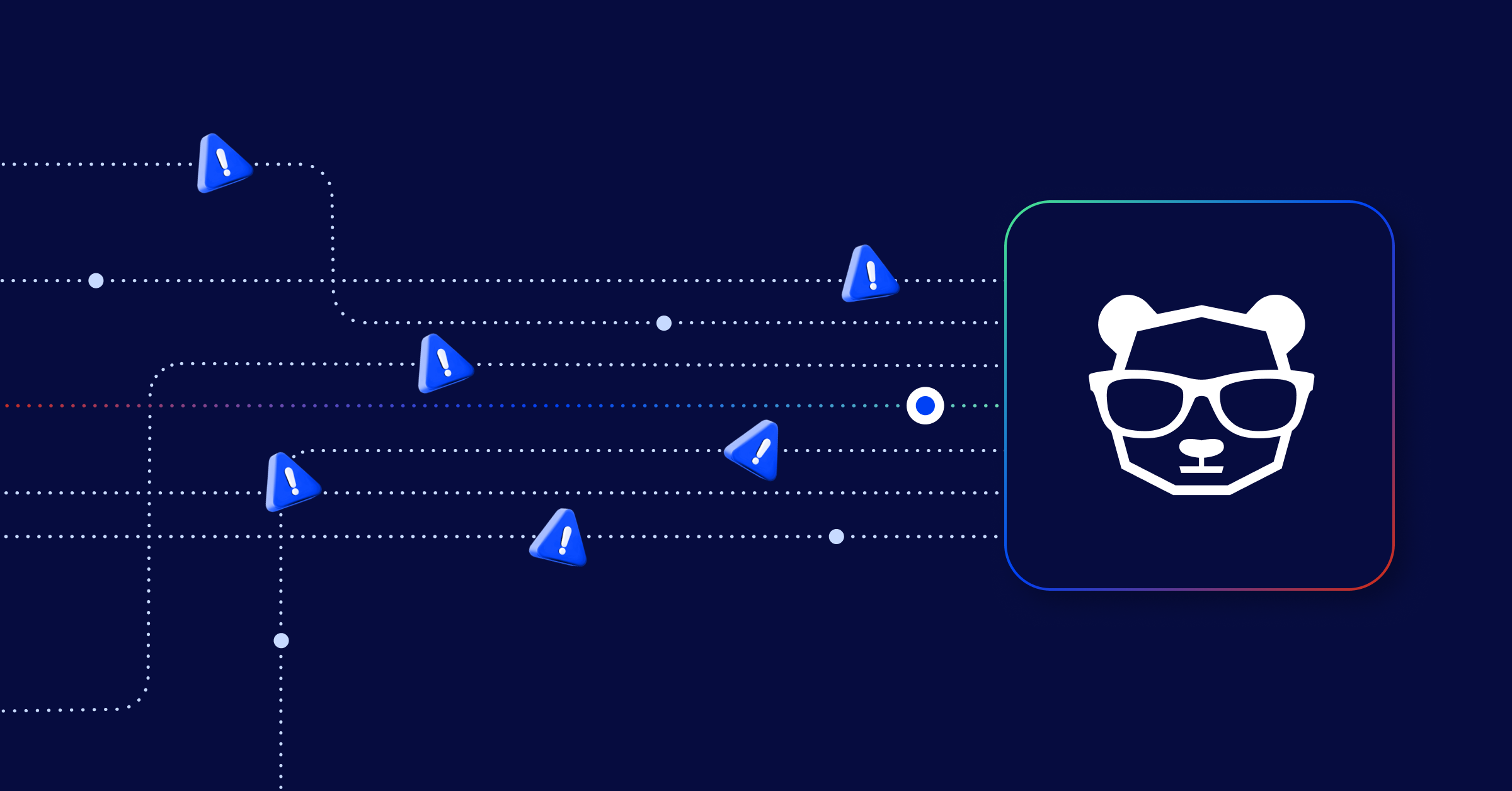
Event correlation solves that by collapsing related events into a single view of what is actually happening. Instead of a hundred alerts about a database, a network segment, and the services that depend on them, responders see one incident: the database is down, and these services are affected. That reduction in noise is the lever that drives lower MTTD, lower MTTR, fewer escalations, and less burnout in the NOC.
Correlation is also what makes downstream automation safe. Agentic AI, runbook automation, and L1 automation all depend on having a single, accurate picture of the incident. Without correlation, automation acts on fragments, and either does too little or does the same work many times over.
Events vs. alerts
The terms event and alert are sometimes used interchangeably, but they are different points in the same pipeline. Mixing them up leads to confusion about what is being correlated and where.
| Dimension | Event | Alert |
|---|---|---|
| Definition | A raw signal that something occurred in a system. | A processed event that has been judged to require attention. |
| Volume | Very high, often millions per day. | Lower, but still often overwhelming. |
| Source | Monitoring agents, logs, traces, infrastructure, and security tools. | Monitoring tools, observability platforms, and ITSM systems. |
| Typical processing | Filtered, enriched, normalized. | Deduplicated, suppressed, correlated. |
| Role in correlation | Inputs to be grouped. | Outputs that may be further grouped into incidents. |
Alert correlation is one form of event correlation that operates on the higher-value, post-processing stream. Modern AIOps platforms correlate at both layers, applying logic to raw events before they become alerts and again as alerts roll up into incidents.
How event correlation works
- Ingest: Events are pulled from all relevant sources, normalized to a consistent schema, and enriched with topology, change, and ownership context.
- Deduplicate: Identical or near-identical events are collapsed so that a single underlying signal is counted once, not thousands of times.
- Group: Related events are clustered using rules, machine learning, topology, or a combination. The output is a candidate incident.
- Score and prioritize: Each incident is ranked by severity, blast radius, and business impact so that the most important issues surface first.
- Route and act: Incidents are routed to the right responder or runbook, and in agentic ITOps environments, the response itself may be initiated automatically.
Rule-based vs. machine-learning correlation
There are two broad approaches to event correlation, and most production environments use a blend of the two.
| Dimension | Rule-based correlation | Machine-learning correlation |
|---|---|---|
| Logic | Explicit rules written by engineers. | Patterns learned from historical events and incidents. |
| Transparency | Highly transparent, easy to audit. | Less transparent, requires explainability features. |
| Maintenance | Rules drift as the environment changes. | Models retrain as new data arrives. |
| Handles novel patterns | Poorly, only what was anticipated. | Better, generalizes from related patterns. |
| Best for | Stable, well-understood failure modes. | High-volume, ambiguous, and changing environments. |
Mature AIOps platforms apply rules where determinism matters, such as compliance or known runbook triggers, and apply machine learning where the volume and variety of events exceed what any team can encode by hand. Topology-aware correlation, which uses the relationships between services in a CMDB or knowledge graph, is increasingly common as a third layer that bridges the two.
Event correlation use cases in IT operations
- Alert noise reduction: Collapse thousands of related alerts into a small number of actionable incidents, freeing L1 capacity for real work.
- Incident clustering across tools: Group signals from monitoring, observability, and security tools into a single incident so responders see the whole picture in one place.
- Topology-aware grouping: Use service and infrastructure relationships to attach symptoms to the failing component, accelerating root cause analysis.
- Change-related incident detection: Correlate event spikes with recent changes to flag deploys that are likely to be at fault and inform change risk management.
- Foundation for agentic ITOps: Provide the clean, correlated incident view that agentic AI needs to triage, summarize, and act safely.
Frequently asked questions about event correlation
What is the difference between event correlation and alert correlation?
Event correlation operates on raw signals from monitoring and observability tools. Alert correlation operates on the higher-value alerts that have already been judged worth attention. Modern AIOps platforms typically do both: they correlate events before they become alerts and again when alerts roll up into incidents.
How does event correlation reduce MTTR?
Correlation reduces MTTR by eliminating the time responders spend stitching together unrelated alerts, identifying duplicates, and figuring out which service is actually affected. With correlation, responders open a single ticket instead of 50, see a single ranked incident, and start work on the fix sooner.
Is event correlation the same as AIOps?
No. Event correlation is one of the foundational capabilities of AIOps, but AIOps also includes anomaly detection, incident response automation, root cause analysis, and increasingly agentic AI. Correlation is the layer that makes the rest possible.
Do you need a CMDB for event correlation?
Not strictly, but topology and service relationship data strengthen the correlation significantly. A CMDB, IT knowledge graph, or service map provides the correlation engine with the structural context it needs to group symptoms with the correct underlying component.
Can rule-based correlation still keep up in modern environments?
Rules remain valuable for known patterns and compliance use cases, but they cannot keep pace with the volume and variety of events in cloud-native environments. Most teams now combine rules with machine learning and topology-aware grouping to get the best of all three.
See also
- Alert Correlation
- Incident Correlation
- Alert Noise
- AIOps
- IT Knowledge Graph
- Event Management
Check out more related content

PLATFORM
BigPanda Agentic ITOps
See how BigPanda uses agentic AI in IT operations.