






What is incident prevention?
Incident prevention is the practice of identifying and removing the conditions that cause IT service disruptions before they affect users. It combines proactive monitoring, change risk management, problem management, and anomaly detection to reduce incident volume, severity, and recurrence over time.
Also known as proactive incident management or incident avoidance.
Why incident prevention matters
Every avoided incident is a saved hour of engineering time, a protected customer experience, and an outage that never had to be communicated to executives. Reactive incident response is necessary, but it is the most expensive way to keep services healthy. The further upstream a team can intervene, the lower the total operational cost.
Incident prevention shifts attention from resolving incidents faster to preventing them in the first place. That includes catching anomalies before they escalate to customer impact, blocking risky changes before they ship, and incorporating lessons from past incidents into monitoring rules, runbooks, and architecture decisions.
For ITOps, SRE, and ITSM leaders, prevention is also where investment compounds. Every hour spent improving change risk scoring or anomaly detection reduces the volume of future incidents, which reduces toil, escalations, and the MTTR burden on the team.
How incident prevention works
Incident prevention is not a single process. It is a set of practices that operate at different points in the service lifecycle. Mature ITOps organizations apply most or all of these in parallel.
- Proactive monitoring and anomaly detection: Statistical and machine-learning models surface deviations in latency, throughput, error rates, and resource use before they cross alert thresholds.
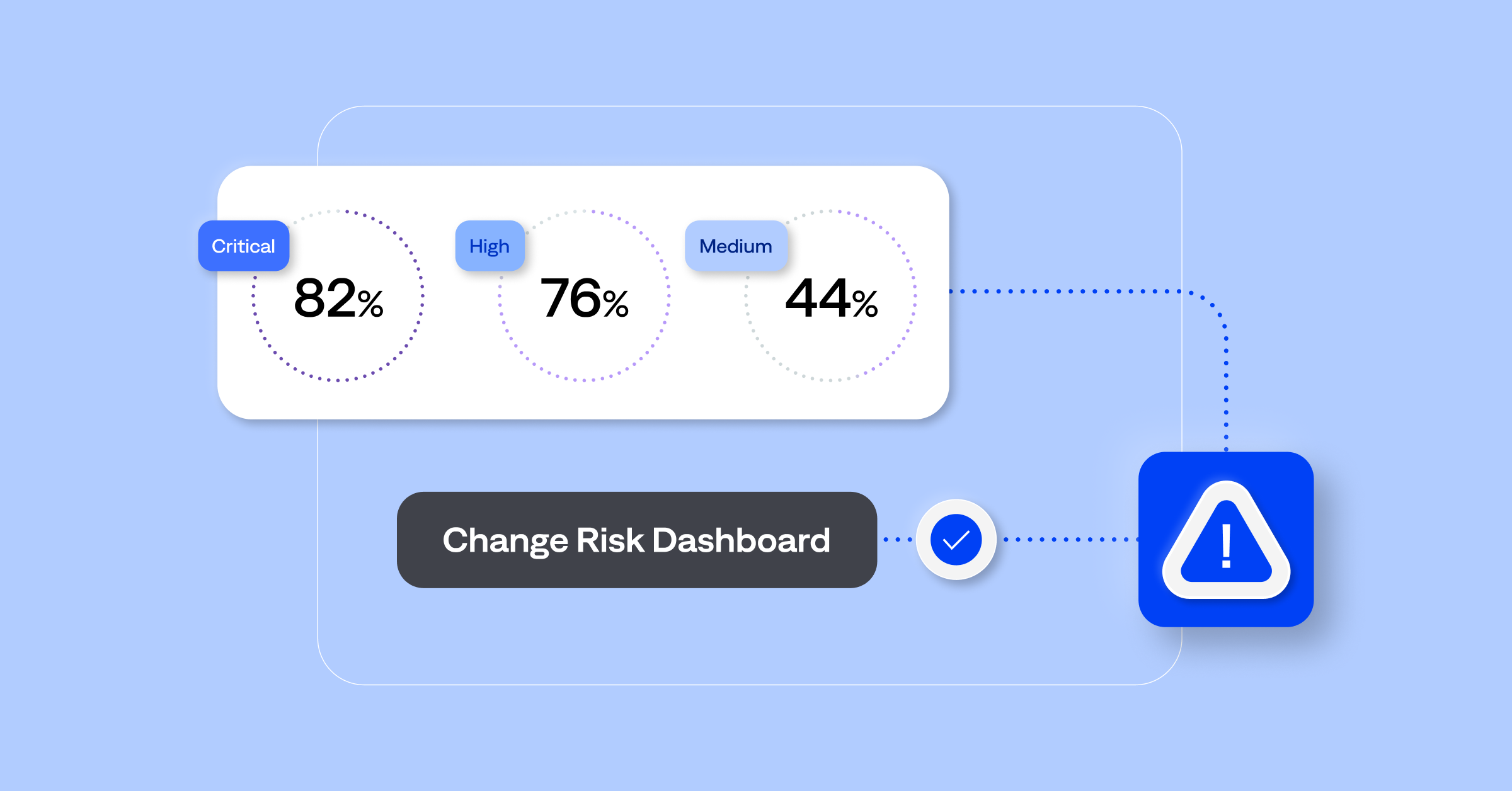
- Change risk management: Every planned change is scored against historical incident patterns, affected services, and recent stability data, so risky changes are caught before deployment.
- Problem management: Recurring incidents are investigated as a class rather than individually, so the underlying cause can be removed rather than repeatedly fixed.
- Capacity and reliability engineering: Teams forecast load, identify saturation points, and address fragile dependencies before they break under real traffic.
- Post-incident learning: Every major incident produces action items that feed monitoring rules, runbooks, architecture changes, and training, so the same incident does not happen twice.
Key characteristics of an incident prevention program
- Data-driven: Decisions about where to invest in prevention are grounded in incident data, not anecdote. Teams know which services produce the most incidents and which changes most often trigger them.
- Cross-functional: Prevention spans ITOps, SRE, engineering, and change management. No single team owns it alone.
- Continuous: Prevention is built into ongoing work, not a one-time project. Every incident review feeds the next round of preventive action.
- Measured: Programs track incident volume, recurrence, and change-induced incident rates, not just MTTR, so the impact of prevention work is visible.
Reactive incident response vs. proactive incident prevention
Reactive and proactive postures are not opposites; mature teams need both. The difference lies in where attention and investment sit and in how the team measures success.
| Dimension | Reactive incident response | Proactive incident prevention |
|---|---|---|
| Trigger | Alerts and user-reported impact | Anomalies, change risk, and incident patterns |
| Time horizon | Minutes to hours | Days to quarters |
| Primary work | Diagnose, contain, resolve | Monitor trends, score changes, and address root causes |
| Primary metric | MTTR and MTTA | Incident volume, recurrence, and change-related incidents |
| ROI model | Cost avoided per incident resolved | Cost avoided per incident prevented |
| Tooling | ITSM, paging, war rooms | AIOps, anomaly detection, change risk management, problem management |
Incident prevention use cases in IT operations
- Change risk scoring: Before a deploy, an AIOps engine scores the change against historical incident patterns and affected services, flagging high-risk changes for additional review.
- Anomaly-driven early warning: Models detect a slow degradation in queue depth, latency, or error rate hours before the issue would have triggered a traditional alert, giving engineers time to act.
- Problem management on repeat incidents: A team identifies a database that produces ten low-severity incidents per month and invests in fixing the underlying schema issue, eliminating the entire class of incidents.
- Capacity intervention: Forecasting flags an upcoming capacity ceiling on a payment service, and the team scales horizontally before the next quarterly traffic peak.
- Knowledge-graph-driven prevention: An IT knowledge graph links incidents, changes, services, and runbooks, so preventive insights can be applied across teams instead of staying trapped in individual postmortems.
Frequently asked questions about incident prevention
What is the difference between incident prevention and problem management?
Problem management is one component of incident prevention. It focuses on identifying and eliminating the root causes of recurring incidents. Incident prevention is broader. It also includes change risk management, proactive monitoring, anomaly detection, and reliability engineering. Problem management asks why incidents repeat. Incident prevention focuses on reducing incident volume across the board.
Can incident prevention eliminate all incidents?
No, and that isn’t the goal. Complex distributed systems will always produce some incidents. The goal of prevention is to reduce volume, severity, and recurrence, so the team can spend more time on engineering work and less on firefighting. A realistic target is fewer incidents, lower business impact per incident, and faster recovery when something does break.
How does AIOps support incident prevention?
AIOps supports prevention in three main ways. It detects anomalies and degradation patterns before they cross traditional alert thresholds. It scores change risk against historical incident data. And it surfaces patterns across incidents that point to underlying problems worth investing in. Combined, these capabilities turn prevention from a reactive afterthought into a continuous practice.
How does change risk management contribute to incident prevention?
A large share of incidents in modern environments are triggered by recent changes. Change risk management scores planned changes against historical incident patterns, affected services, and recent stability data, then surfaces high-risk changes for additional review or staged rollout. Catching a risky change before deploy is one of the highest-leverage forms of prevention available.
What metrics measure incident prevention?
Useful prevention metrics include total incident volume, the rate of change-induced incidents, incident recurrence, mean time between failures, and the percentage of major incidents that result in completed action items. MTTR alone does not capture prevention, because it measures how fast teams recover, not how often they need to.
See also
- Problem Management
- Change Risk Management
- Anomaly Detection
- Root Cause Analysis (RCA)
- AIOps
- Agentic ITOps
Check out more related content


PLATFORM
BigPanda Agentic ITOps
See how BigPanda uses agentic AI in IT operations.