





BigPanda has been recognized as a Niche Player in the 2026 Gartner® Magic Quadrant™ for AI Applications in IT Service Management report

On August 17, Gartner placed BigPanda in the Niche Players quadrant of the 2026 Gartner Magic Quadrant for AI Applications in IT Service Management (ITSM). It’s our first time on this MQ, after an honorable mention last year. I’m glad we’re there, and I want to explain why a company that doesn’t sell an ITSM platform reads that as a strong result.
We didn’t enter this market. It came to us.
BigPanda isn’t an ITSM platform, and we’re not trying to become one. We don’t hold your tickets, your CMDB, your change calendar, or your service catalog. Other companies in the Magic Quadrant do. BigPanda customers typically run one of those platforms today and will likely continue to run it in five years.
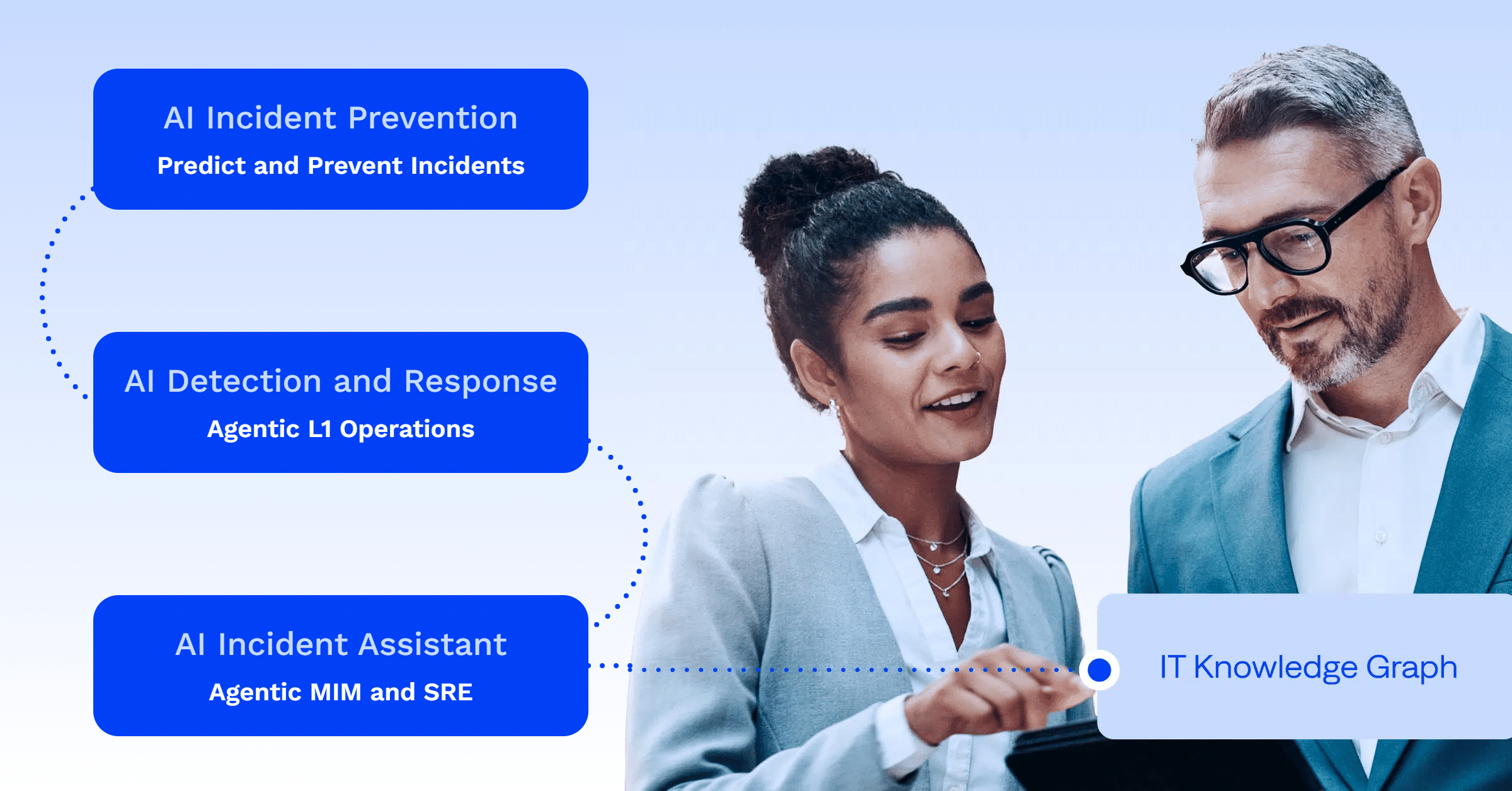
We’re an agentic IT operations platform, and we apply AI to the incident lifecycle end-to-end. BigPanda scores which changes are likely to cause incidents, detects and correlates what your monitoring tools, service desk, or external observability tools are signaling, triages and routes what’s real to the right teams, investigates root cause, and automates the workflows that resolve it. All of it reasons over one shared model of your estate: the IT Knowledge Graph. Event correlation is where we started, not the edge of what we do.
So how does an agentic ITOps platform end up on the ITSM Magic Quadrant? Gartner evaluated nine vendors against eleven criteria of varying weights to determine completeness of vision and ability to execute. My view is that we’re there because of what we hand the ITSM platform. BigPanda turns raw event data into operational signals, and an ITSM platform that receives them makes better recommendations and responds to incidents more accurately. That’s our IT Knowledge Graph doing its job.
Why we feel Niche Players is the honest placement
As Gartner states in its research, “Niche Players in this market demonstrate strengths in specific areas of AI in ITSM and often offer solid capabilities for particular use cases. However, they generally have not invested sufficiently to satisfy all requirements for Completeness of Vision and Ability to Execute. Established providers in this quadrant may position AI applications for ITSM as add-on offerings or exploratory extensions of established markets, such as conversational AI platforms or ITSM platforms. The Niche Players in this Magic Quadrant are expanding their go-to-market efforts and have not yet developed the vision required to break out of the quadrant.”
In my view, that gap reflects which use cases a service desk evaluation weighs, not how much we invest in AI.
Focusing on a segment of the market rather than the whole of it might be thought of as addressing a market niche. But we think the segment line isn’t where most readers will assume it is.
We don’t build a slice of the desired capabilities and skip the rest. We build virtual agents, AI search, and content generation. The difference is who we build them for. Many evaluations look at AI in service management through the service desk lens: employee requests, ticket handling, and deflection. We build for operational IT across the enterprise. A service desk agent resolves one person’s request. An operational IT agent determines that 40 requests, 6 monitoring alerts, and last night’s change are the same event and what that event is doing to revenue. Same capability names, different job.
ITSM platforms own the service desk side, and they’ve earned it. If you’re choosing a system of record, go look at them.
One thing I think you should consider before you use any analyst evaluation to pick a vendor: assess whether the product works in practice, or focus on customer outcomes, adoption, total cost of ownership, and time to value. Any evaluation may map who’s building what, but it doesn’t tell you what works.
The walled garden problem
What follows is my own reasoning, from running a global ServiceNow platform team at Stellantis and from what our customers tell me now.
ITSM platforms manage work once it becomes work. They were never designed to ingest millions of monitoring events and decide which 200 of them are the same outage. Agentic features don’t fix that. An agent handed 50 duplicate tickets for one database failure will triage 50 tickets.
Volume is what people notice first. The harder constraint is what the platform can see. An ITSM platform is a walled garden, mostly by design. It knows tickets, CIs as the CMDB recorded them, changes as they were submitted, and SLA clocks. It doesn’t know what your observability stack saw 90 seconds ago, which services depend on the host that just failed, or which of last night’s deployments touched the code path in question. That data lives in 10 other tools.
An agent reasoning within those walls can automate ticket handling. It can’t determine the incident’s impact radius because everything that determines it lies outside the walls. You get automation that’s both confident and wrong, which costs more than no automation at all. That’s the failure mode I’d watch for as agentic features roll out across the ITSM platforms in 2027.
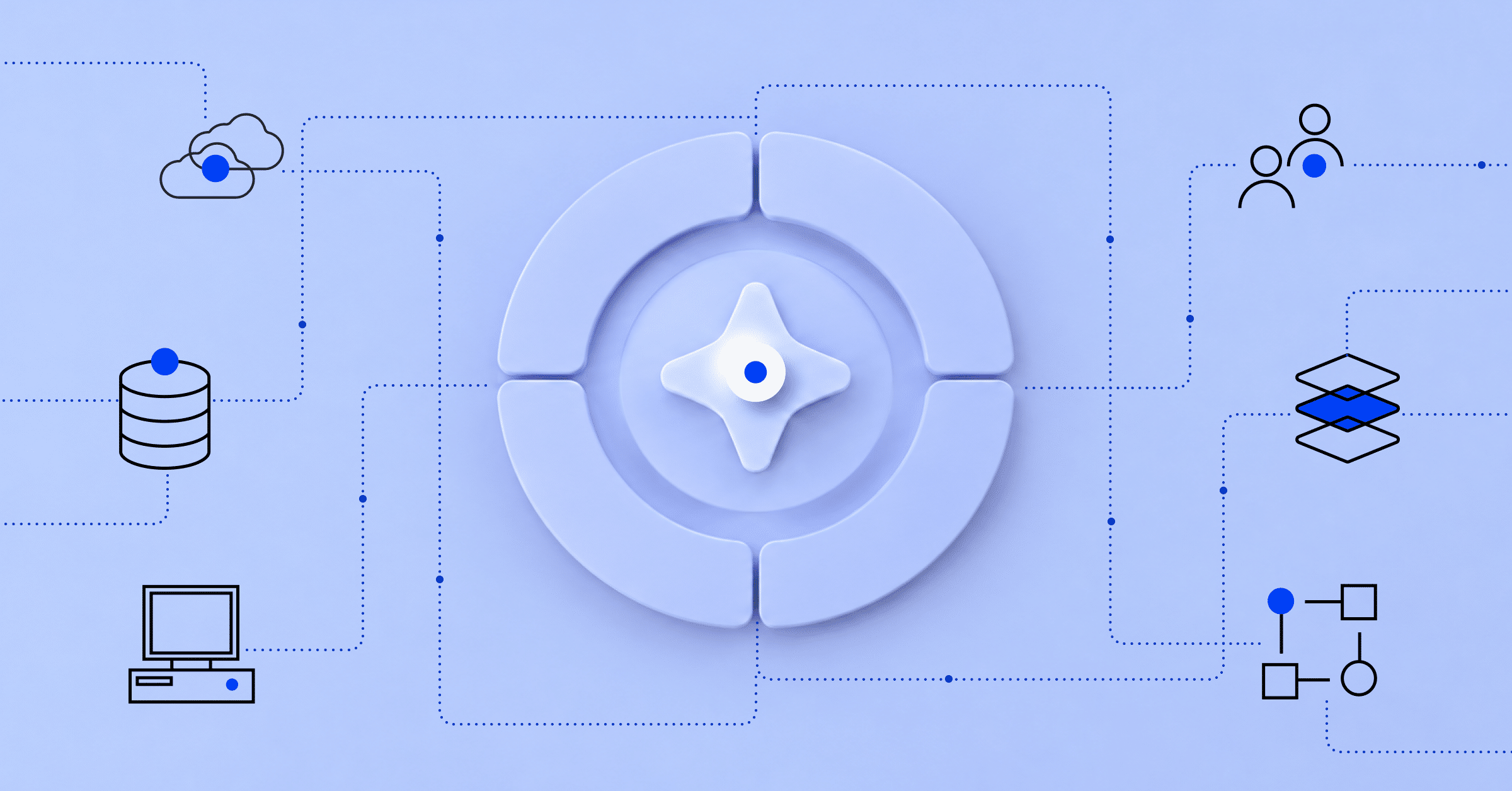
Our IT Knowledge Graph solves that. It spans monitoring signal, topology, change records, and ticket history across the whole estate rather than one platform’s slice of it, so an agent reasoning over it knows what broke, what depends on what broke, what changed just before, and who owns the result. Cambia Health Solutions calls the outcome “a better understanding of what is impacted throughout the organization and how to fix it quickly.” They identify critical alerts within 30 seconds, meet 95% of NOC SLAs, and run 83% alert compression.
Our customers don’t replace their ITSM platform with us. They put us in front of it, and the platform they already pay for gets better at the agentic work they bought it for.
Other things to note
Agentic ITSM. In my view, much of what agentic ITSM calls for today, such as context engineering, reasoning loops, and multi-agent orchestration, is scaffolding you need when there’s no unified context layer. We built the context layer instead.
Three of our capabilities have recently become generally available: Investigation Swarm, where agents choose which specialists to invoke and in what order; Custom Agents with agent-to-agent interoperability; and Adaptive Memory. Automated remediation with a human in the loop and change risk scoring for CI/CD pipelines are targeted for December.
Pricing. An ITSM platform plus BigPanda may cost more than the platform alone, but what the combination returns in value depends on your alert volumes, escalation rate, and ticket counts, which is the better conversation to have.
Language coverage. Our UI, documentation, and support are currently English-only, though our AI supports multiple languages. If you run a service desk in six languages, ask us directly.
What to do with this
Use analyst evaluations to surface vendors for consideration and often to identify contenders outside the most well-known (or those with the largest marketing budgets).
Ask your ITSM vendor a direct question: when your agentic triage runs, what can it see outside this platform? If the answer is a list of integrations you’d have to build and a correlation engine you’d have to maintain, you’ve found the gap we fill.
We think we’re a Niche Player because we’re built for operational IT.
If you are focusing on the service desk, remember: same capabilities, different lens.
I’ll take that trade.
Rob Pickering is Field CTO at BigPanda.
Source: Gartner, 2026 Gartner Magic Quadrant for AI Applications in IT Service Management (ITSM), Chris Matchett, Luis Fernandez, Siddarth Shetty, 17 August 2026, ID G00841606. Gartner subscribers can access the report at https://www.gartner.com/document-reader/document/8270821
Gartner does not endorse any vendor, product or service depicted in its research publications and does not advise technology users to select only those vendors with the highest ratings or other designation. Gartner research publications consist of the opinions of Gartner’s research organization and should not be construed as statements of fact. Gartner disclaims all warranties, expressed or implied, with respect to this research, including any warranties of merchantability or fitness for a particular purpose. GARTNER and MAGIC QUADRANT are registered trademarks of Gartner, Inc. and/or its affiliates in the U.S. and internationally and are used herein with permission. All rights reserved.