






AI can speed up development. Can operations keep up?
Enterprise software can now change faster than most operating models can interpret what changed.
That creates a question many AI plans leave unanswered: when development accelerates, where does the operational bottleneck go?
Faster change creates a downstream queue
A faster development process can produce more changes, more often, across more services and dependencies.
That can be valuable. Teams can test ideas sooner, respond to customers faster, and improve products continuously.
But the value of faster change depends on what happens after the change reaches production.
When an incident follows, someone still needs to reconstruct what changed, which services depend on it, what the customer impact might be, and who can act. If the response process still relies on people searching systems one at a time, the speed gained in development can create a queue in operations.
The work hasn’t disappeared. It’s moved downstream.
The work of understanding still needs context
A deployment record alone doesn’t explain an incident. The relevant context may be spread across a service map, a ticket, an ownership record, a runbook, and the memory of someone who has seen a similar failure before.
That context also changes. Ownership moves. Dependencies evolve. A runbook that was accurate last quarter may no longer reflect the environment.
The operating challenge isn’t simply detecting that something changed; it’s connecting the change to service impact and deciding which next action is safe.
That work still queues behind human attention when each investigation begins by reconstructing the same picture.
Operating at the speed of the environment
The answer isn’t to slow development down until humans can keep up, but instead to change the operational work that follows.
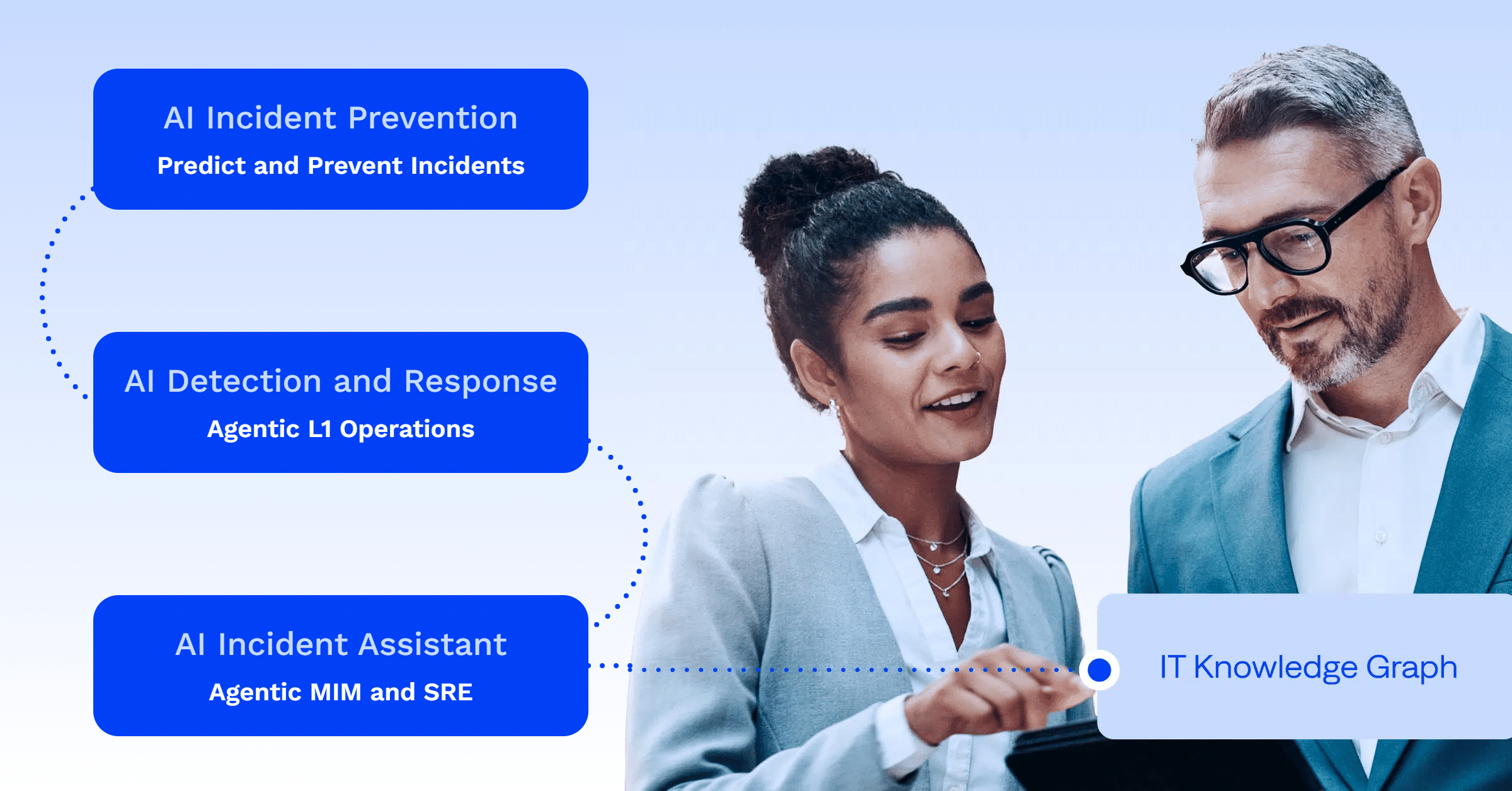
Agents can assemble the relevant context, connect changes to services, surface the paths already examined, and help determine which actions require human judgment. People remain responsible for decisions that involve business tradeoffs, novel situations, and consequences the system cannot safely infer.
That division makes faster development more useful. The business gets the value of speed when it can understand and run what it ships.
AI can accelerate software development, but the operating model has to make that acceleration usable.