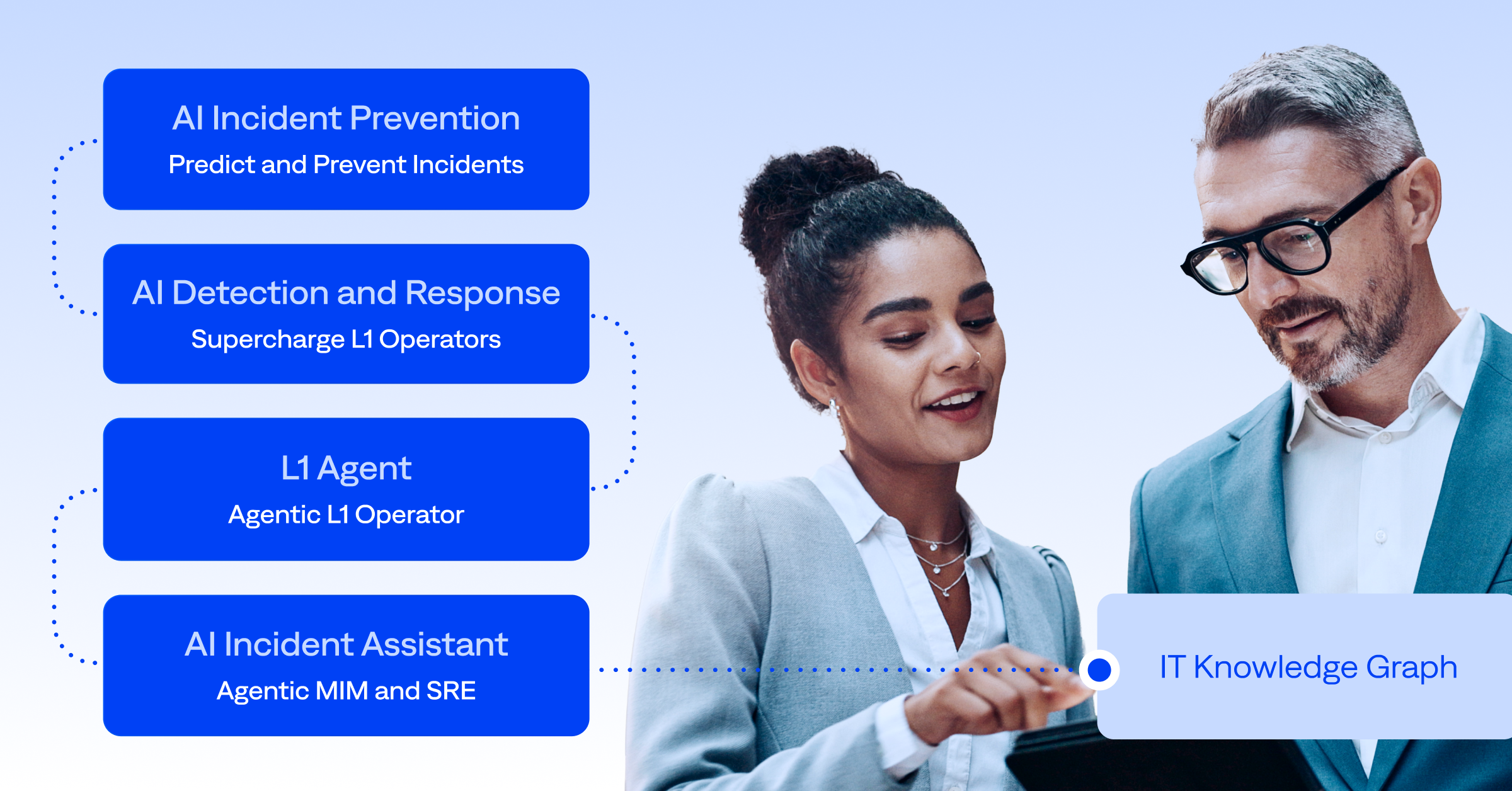






AI Detection and Response
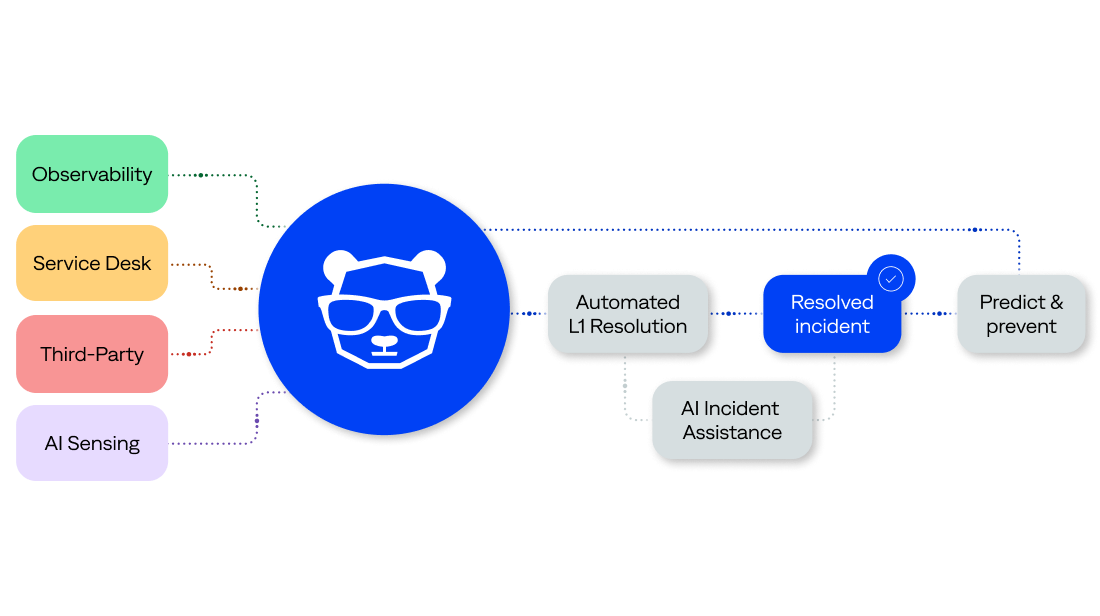
BigPanda detects and triages incidents quickly and with confidence. So your teams can act before incidents escalate.
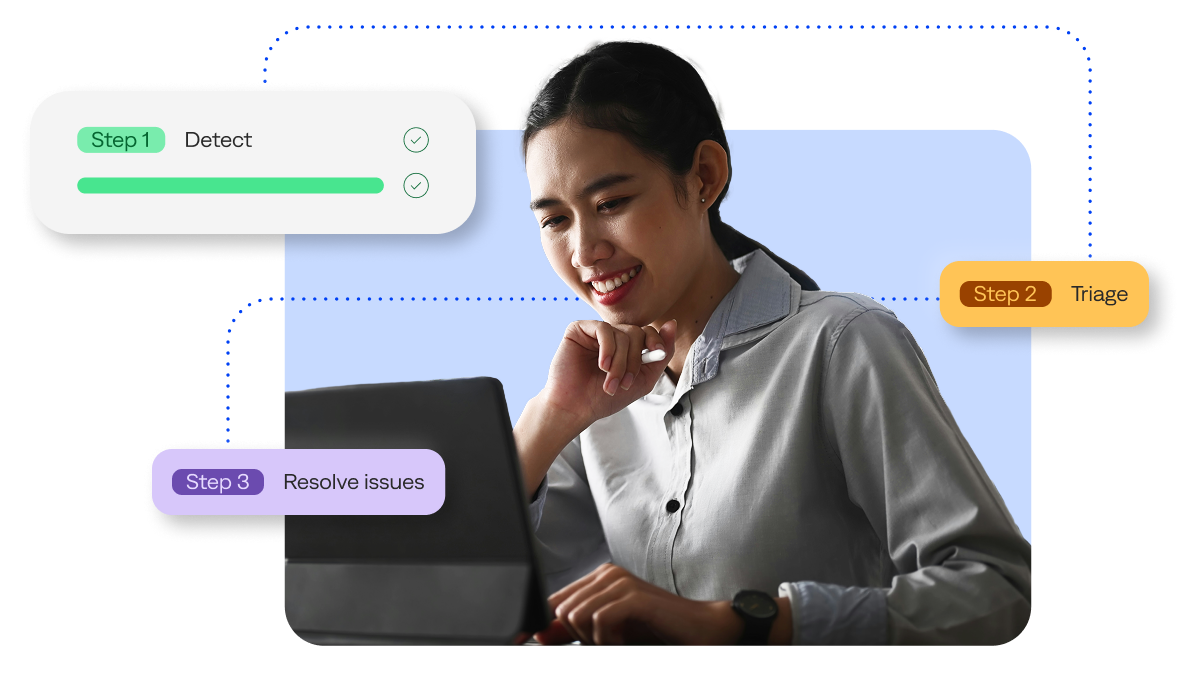
Smarter detection. Faster triage. Fewer escalations.
AI Detection and Response gives your teams complete, correlated context from the moment an incident is detected. Agentic triage gathers and surfaces the right information so responders can make confident decisions faster, without having to chase data across disconnected tools.
Proactive incident detection
AI detection provides your responders with real-time signals, AI-generated insights, and guided actions. It filters out alert noise by automatically correlating signals, and it detects early indicators of potential issues before they escalate and impact your business.
Faster and smarter triage
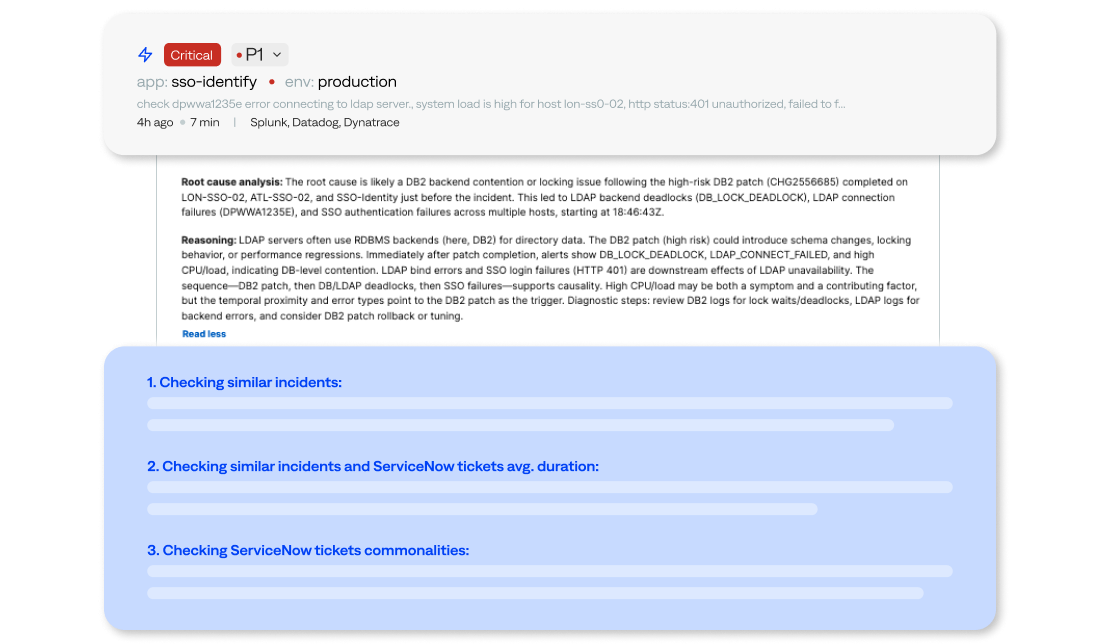
Agentic triage uses AI agents to gather and summarize relevant incident information from multiple sources, including recent changes, external observability, service desk activity from ITSM tools, historical incidents, and other ongoing incidents. Every incident includes a unified summary and suggested next steps, so responders have the context they need to triage accurately from the start.
Confident incident response
AI response surfaces suggested remediation steps based on previously resolved incidents, with links to relevant runbooks and knowledge base articles. Responders get clear guidance on the best next action, and when escalation is needed, tickets arrive enriched with full context so the receiving team can act immediately.

Take control of incidents before they escalate

“Not only can we see the alerts, but we can evaluate them using correlation that recognizes patterns, connects alerts, and leads to fewer incidents.”


“Adding context to enrich alert data leads to more effective prioritization, faster problem resolution, and fewer service disruptions.”
Paul Bevan
IT Infrastructure Research Director
Bloor Research

“BigPanda has enabled us to get more real-time, relevant data about a specific incident. This has significantly reduced our mean time to resolution (MTTR).”
FAQ
What types of data can I integrate into BigPanda?
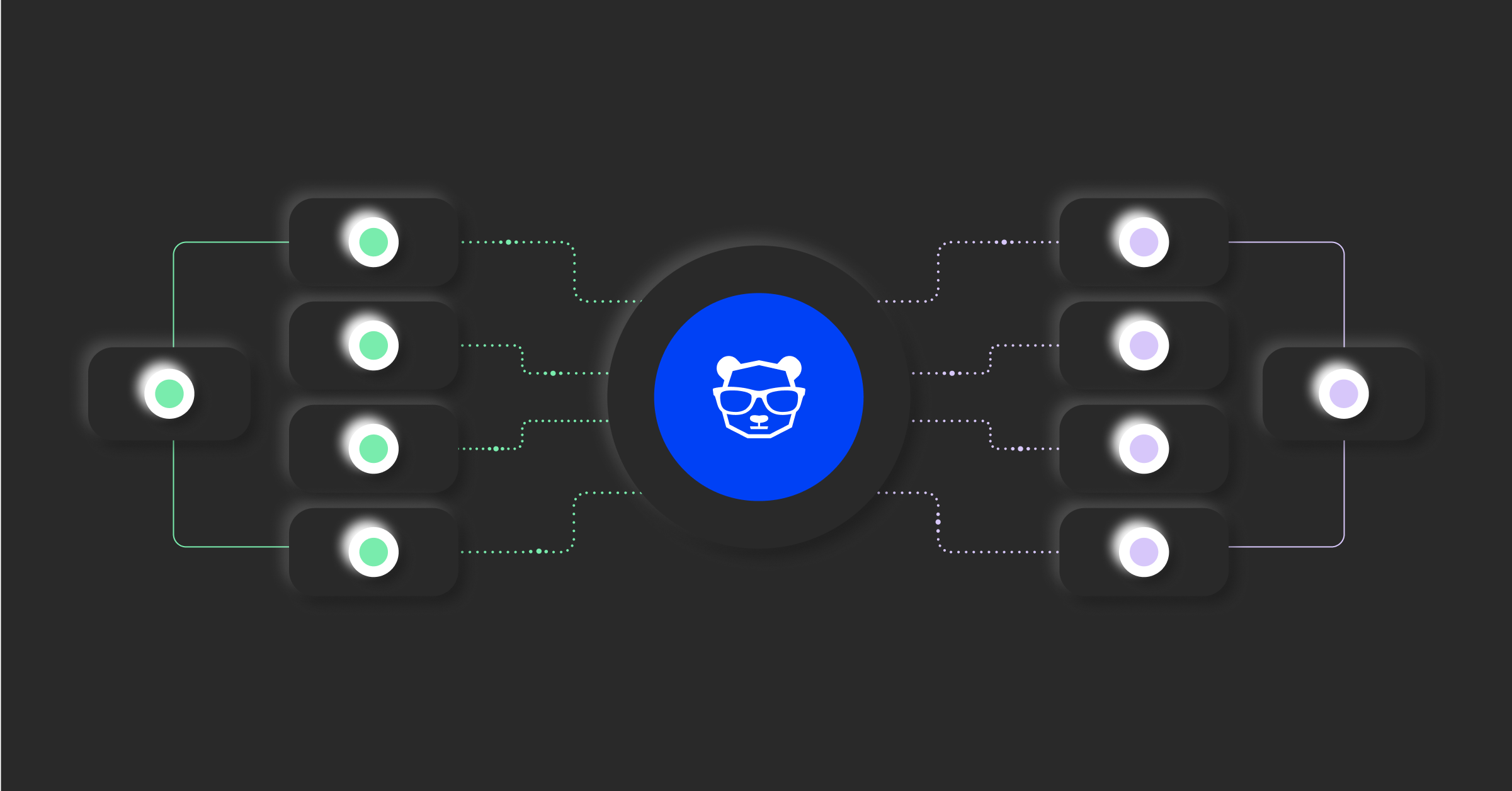
The BigPanda IT Knowledge Graph can ingest data from various internal and external sources, including monitoring and observability tools, historical incident records, knowledge bases, runbooks, external observability, and service desk tickets.
How does BigPanda provide additional context for enterprise ITOps?
BigPanda enriches incidents with relevant context by ingesting and normalizing data from diverse sources, including topology, CMDB, and change integrations.
Multidimensional alert correlation and AI incident analysis provide your teams with deeper insights and automate root cause analysis (RCA) for quick, informed decision-making.
BigPanda uses AI agents to gather relevant information from historical incidents, recent changes, external observability, service desk tickets, and other ongoing incidents. It then summarizes the information to provide additional context.
This comprehensive approach provides your teams with a holistic view of your system interconnectivity and operational impacts, enabling them to resolve incidents more efficiently.
What is external observability?
Monitoring and observability tools often fail to detect alerts caused by external factors, such as power outages and weather events.
To provide additional context for greater awareness, BigPanda integrates alerts from external sources, such as social media monitoring, power and weather outage reports, and the status pages of cloud providers and third-party SaaS applications. We call this external observability.
Incorporating external observability data helps teams expand their visibility and eliminate blind spots.
Do the AI agents learn and adapt?
Yes. AI agents recommend remediation steps based on incident context, drawing on your institutional and informal knowledge, even when it is undocumented. The system learns from previously resolved incidents over time, improving the accuracy of triage suggestions and reducing unnecessary escalations.
Does BigPanda AI Detection and Response have agentic workflows?
Yes. When an incident occurs, AI agents gather and analyze relevant data across other ongoing incidents, service desk tickets, external observability, change correlation, and historical incidents. The result is an AI-generated incident summary with clear, suggested actions, providing responders with immediate situational awareness and a confident starting point for triage.
Check out more related content
DEMO
See BigPanda AI Detection and
Response in action.


- PlatformPlatform
- Agentic IT Operations
- Platform Overview
- AI Incident Prevention
- AI Detection & Response
- L1 Agent
- AI Incident Assistant
- IT Knowledge Graph
- BigPanda AIOps
- BigPanda Core
- Advanced Insight
- Biggy AI
- Rebranding Matrix
- Integrations
- Security & Compliance
- Features
- Detection
- Open Integration Hub
- AI Detection
- Diagnosis
- Service Desk Correlation
- Suggested Actions
- Incident Correlation
- Triage
- Automated Incident Triage
- Root Cause Analysis
- Similar Incidents
- Prevention
- Change Risk Management
- Problem Management
- Solutions
- Automating L1 Detection & Response
- Empowering Experts with AI Assistance
- Predicting & Preventing Disruptions
- Personas
- IT operations
- Incident management
- IT service management
- Site Reliability Engineering
- Industries
- Financial services
- Manufacturing
- Insurance
- Media and entertainment
- Managed services
- Airlines
- All industries