






The high cost of low-quality L1 NOC outsourcing

New research from BigPanda reveals what enterprises spend on outsourced IT operations support, what they get in return, and why leaders are ready to rethink the model.
Enterprises spend an average of $5.4 million a year on outsourced IT operations support.
That’s a substantial investment. It should produce reliable frontline operations: incidents detected, understood, routed, and resolved with the speed and accuracy the business expects.
The research shows a different picture.
The cost is higher than the contract
The quality gaps are hard to ignore:
- 34% of L1 issues are misrouted.
- 24% are resolved incorrectly or require rework.
- 94% of respondents report an SLA breach tied to poor outsourced ITOps performance.
The financial model can expand, too. 90% of respondents reported unplanned expansion, overage, or true-up charges. Those charges added an average of 30% to annual contract costs.
The result is an operating model that asks enterprises to spend more without reliably improving the work that happens at the frontline.
More providers haven’t solved the problem
The environment itself is getting harder to operate. Respondents report handling approximately 25,000 L1 NOC incidents per month while using an average of 19 monitoring and observability tools, and 23% use 25 or more tools.
The provider model is also fragmented. 79% of respondents say their organizations use multiple GSIs for ITOps support.
That doesn’t make every GSI relationship a failure, but it does show why adding another provider, another handoff, or another layer of capacity doesn’t necessarily improve the outcome. When context is scattered, the frontline process remains vulnerable to misrouting, rework, and service risk.
This is an operating-model problem, not a verdict on any one provider.
IT leaders are ready to consider a different model
The status quo isn’t fixed. 92% of respondents say they are open to, already evaluating, or piloting alternatives to their current ITOps approach.
The research also identifies where change can start: 46% of L1 work is routine enough to automate—today.
That doesn’t mean removing human expertise from IT operations. It means applying intelligence to repeatable work so teams can spend more time on incidents and decisions that require judgment.
What Agentic ITOps changes
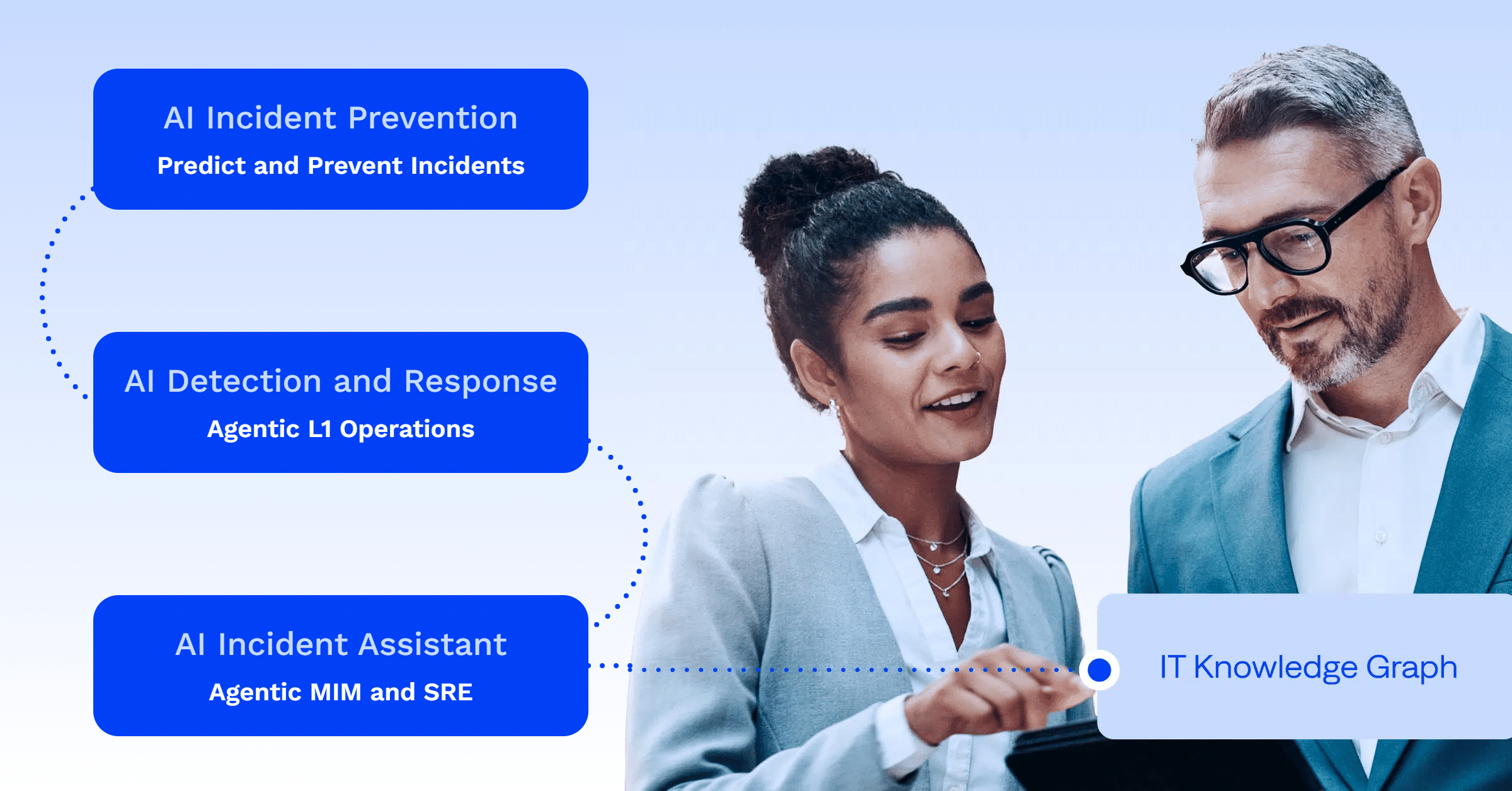
Agentic ITOps connects automation to the operational context needed to make it useful. An IT Knowledge Graph provides that context by connecting the systems, services, incidents, and history that teams already rely on.
BigPanda L1 Agent applies that context to frontline operations, helping detect, triage, and resolve routine incidents while reserving human expertise for work that requires judgment.
The goal is practical: fewer avoidable errors, less rework, and more time for the people responsible for keeping critical digital services running.
Read the research
The cost of L1 NOC outsourcing isn’t only the contract value. It’s also the operational drag that arises when routine work is handled slowly, inconsistently, or without sufficient context.
Read the press release and explore the full survey report, The High Cost of Low-Quality L1 NOC Outsourcing.
Methodology
BigPanda commissioned UserEvidence to survey 112 U.S.-based IT leaders at global enterprises using GSIs for L1/NOC support. Respondents were senior director-level or above. Figures are self-reported, and the average annual spend figure is based on 109 valid responses.