






Benefits
- Protect revenue:
Reduce downtime across ecommerce, POS, and payments to protect sales and maintain availability during peak shopping periods. - Accelerate retail modernization:
Unify operational data and automate response to support faster deployments and modernization without increasing instability or operational risk. - Deliver seamless experiences:
Maintain reliable digital and in-store services to ensure consistent, uninterrupted omnichannel shopping experiences for customers. - Efficiently scale operations:
Reduce reactive firefighting so IT teams can support growth initiatives and innovation without increasing operational overhead.
Retail organizations operate in an always-on environment where digital storefronts, in-store systems, supply chain platforms, and customer engagement technologies must perform flawlessly. Even brief IT disruptions can lead to abandoned carts, lost transactions, and damaged brand trust. Customers expect seamless, personalized experiences across channels, so retailers must ensure that technology supports growth.
At the same time, retail IT environments are becoming more complex. Legacy systems coexist with modern cloud platforms, operations span thousands of locations, and seasonal traffic surges place intense pressure on infrastructure and teams. Manual, reactive approaches to incident management struggle to keep pace, resulting in increasing operational costs and risks. To remain competitive, retailers need a more innovative approach to ITOps that reduces downtime, improves efficiency, and prevents disruptions before they impact customers.
- Legacy systems and modernization pressure
Retailers must support aging point-of-sale, warehouse, and merchandising systems while rapidly modernizing their digital and omnichannel platforms. This tension hinders innovation, increases operational overhead, and makes it difficult to maintain consistent performance across different environments. - Operational complexity at massive scale
Retail IT teams manage geographically distributed systems across stores, fulfillment centers, and ecommerce platforms. Fragmented visibility and high alert volumes make it challenging to detect issues early and coordinate response across teams and locations. - Peak demand and customer experience risk
Seasonal events and promotions drive critical revenue but amplify IT risk. Outages during peak periods disrupt transactions, frustrate customers, and create lasting brand damage. Retailers must ensure reliability when demand is highest.
How agentic ITOps from BigPanda can help
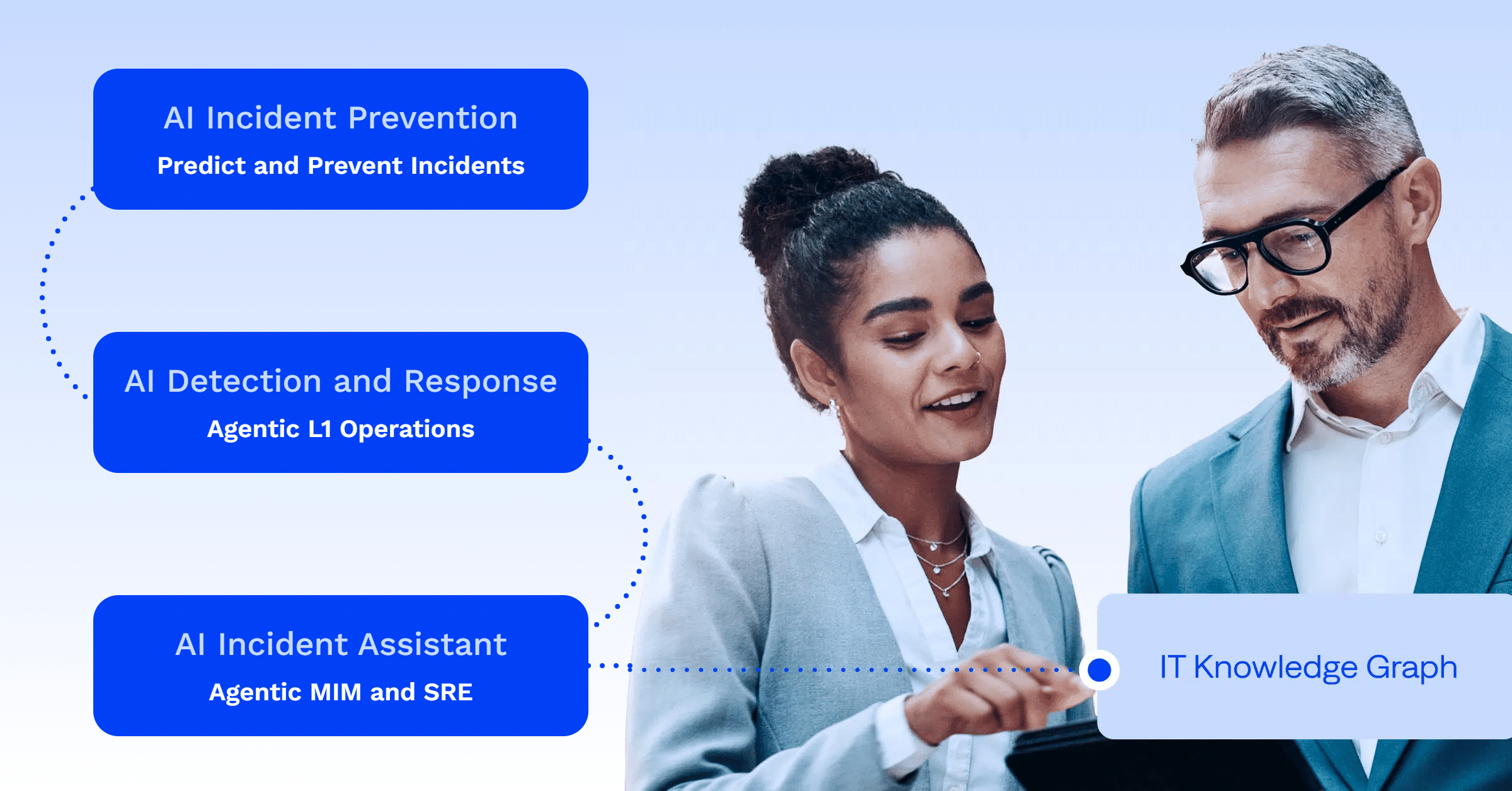
Retail organizations must maintain reliable digital, in-store, and supply chain systems to support seamless shopping experiences and protect their revenue. Disconnected tools and fragmented visibility make it difficult to detect and respond to issues during critical business moments. The BigPanda Agentic IT Operations Platform addresses these challenges by unifying data and applying AI across detection, response, and prevention.
When issues arise across complex retail environments, noise and limited context slow down response. BigPanda correlates signals across monitoring, ITSM, and change management systems to quickly surface meaningful incidents and provide actionable context. Through AI Detection and Response, retail teams gain early awareness of problems impacting e-commerce, point-of-sale, payments, and fulfillment systems, reducing downtime and customer impact.
Once an incident is underway, rapid coordination is essential. BigPanda automates investigation, communication, and collaboration across infrastructure, application, and operations teams. With the BigPanda AI Incident Assistant, retail organizations can resolve incidents faster, reduce manual effort, and maintain consistent customer experiences across all channels.
Modernization and frequent system changes introduce additional risk. BigPanda analyzes change activity, dependencies, and historical outcomes to identify potential issues before they affect shoppers. AI Incident Prevention helps retailers confidently deploy updates, reduce recurring incidents, and minimize disruptions during high-demand events.
These capabilities are powered by the IT Knowledge Graph, which continuously learns how retail systems behave in real-world conditions. This agentic approach enables coordinated action across the full incident lifecycle, helping retailers reduce operational cost, lower risk, and deliver reliable, always-on shopping experiences.
AI Detection and Response
AI Incident Assistant
AI Incident Prevention
Challenge
High alert volumes and fragmented visibility can delay the detection of issues impacting e-commerce, POS, payments, and fulfillment systems.
Investigating retail incidents is slow due to complex dependencies and manual coordination across digital, store, and operations teams.
Frequent changes and recurring issues introduce risks that often surface only during peak demand and high-traffic events.
Business value
Correlate signals across retail systems to surface critical incidents early and reduce downtime during peak shopping periods.
Automate investigation and collaboration with AI summaries and recommendations to speed incident handling and reduce resolution time.
Analyze change and historical patterns to identify risk early and prevent incidents before they disrupt customer experiences.
AI Detection and Response
Challenge
High alert volumes and fragmented visibility can delay the detection of issues impacting e-commerce, POS, payments, and fulfillment systems.
Business value
Correlate signals across retail systems to surface critical incidents early and reduce downtime during peak shopping periods.
AI Incident Assistant
Challenge
Investigating retail incidents is slow due to complex dependencies and manual coordination across digital, store, and operations teams.
Business value
Automate investigation and collaboration with AI summaries and recommendations to speed incident handling and reduce resolution time.
AI Incident Prevention
Challenge
Frequent changes and recurring issues introduce risks that often surface only during peak demand and high-traffic events.
Business value
Analyze change and historical patterns to identify risk early and prevent incidents before they disrupt customer experiences.
“AIOps’ ability to master vast amounts of data from varied sources of information makes it possible to intercept potential issues before they cause problems.”
Valerie O’Connell
Research Director
EMA Research

