AI Incident Assistant
Resolve major incidents faster
AI Incident Assistant automates major incident response and gives SREs deep, AI-powered investigation, so your team resolves major incidents faster, with less chaos.
71%
faster mean time to resolution on major incidents
A global hospitality provider
$3.2M
saved in bridge call costs in one year
A global insurance provider
20 → 1
minutes of initial troubleshooting time on incidents
A global hospitality provider
Investigate and resolve incidents faster with agentic AI
Surface hidden knowledge and cross-system context from siloed teams and tools: what’s happening, why, and how to fix it.
In the product
Ask where you already work. Approve before it acts.
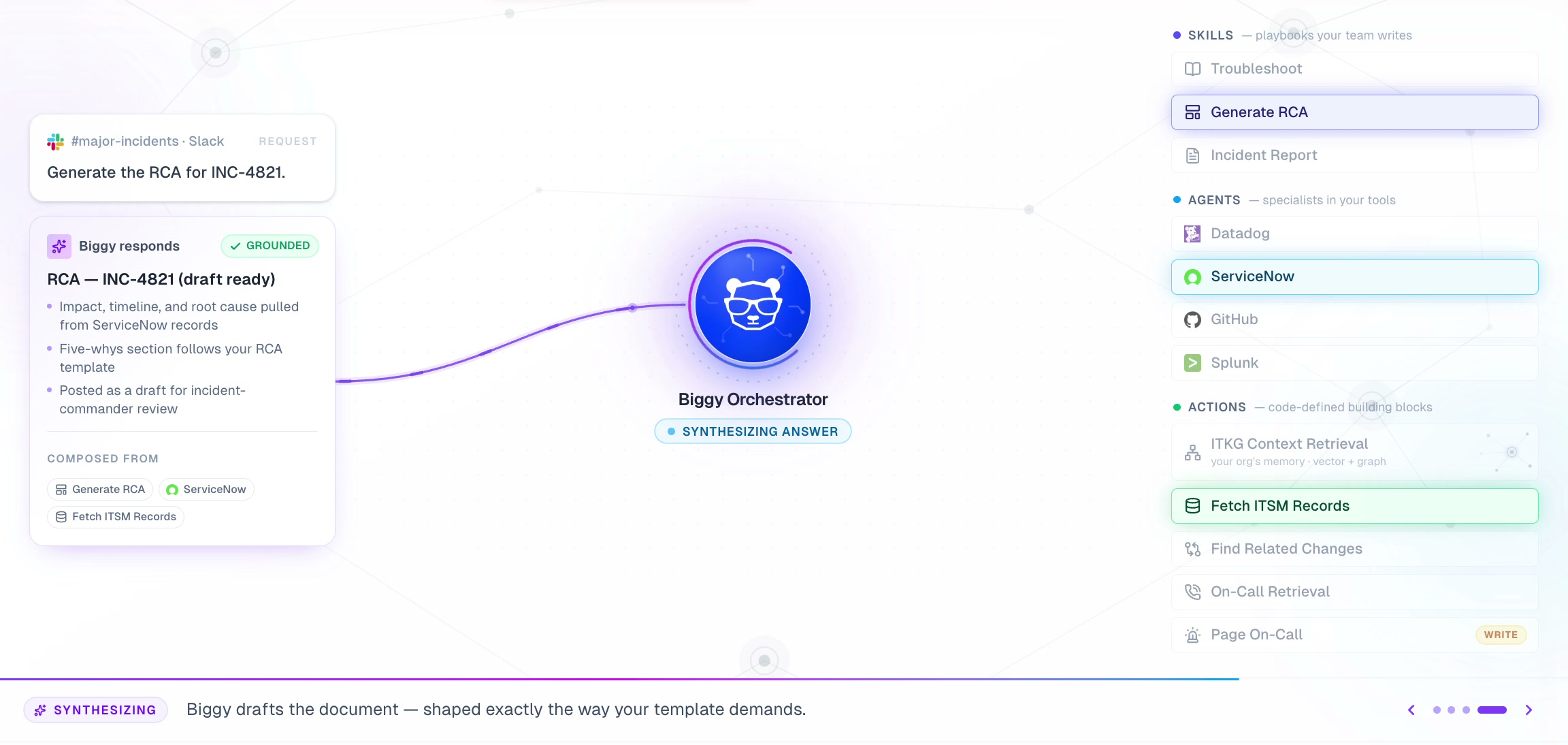
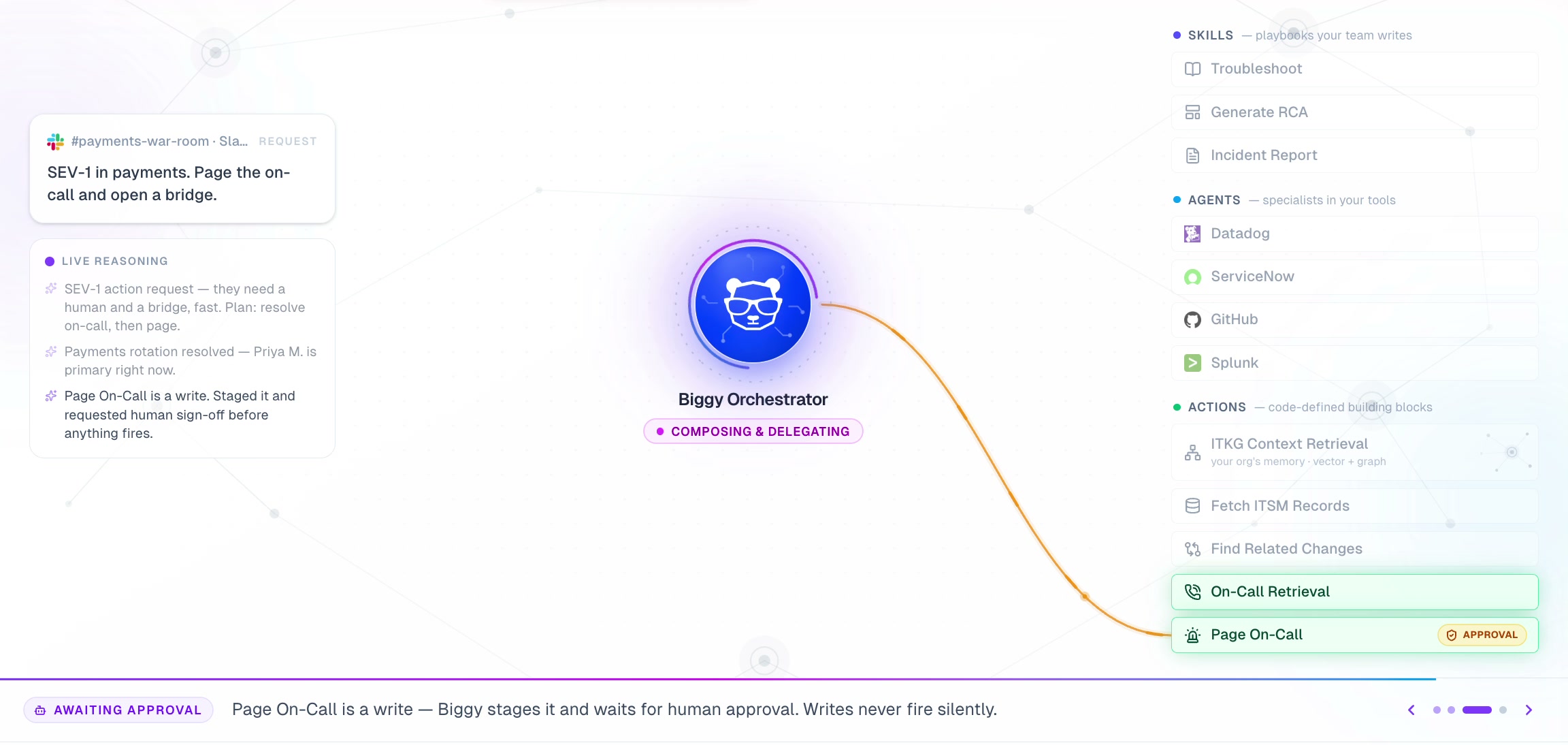
Make every incident responder an expert
Always-on AI agents monitor, investigate and coordinate incident response at machine speed, without manual overhead.
Built for
- Service desk
- Service owners
- L2 support
- L3 engineers
- SREs
- Incident managers
- Incident commanders
FAQ
What type of data and knowledge does AI Incident Assistant analyze?
AI Incident Assistant combines telemetry data, service history and tribal knowledge integrated from open, agnostic sources and augmented with GenAI. It gives responders at all levels a deep understanding of your IT infrastructure, so they can investigate quickly and accurately.
Is AI Incident Assistant secure?
AI Incident Assistant follows all the security controls for data handling and customer data protection that BigPanda follows. BigPanda applies industry-standard security technologies and procedures to protect your data, whether it's transmitted, stored or processed.
Which IT teams benefit from using AI Incident Assistant?
Incident management teams, including the service desk, service owners, L2 support, L3 engineers, SREs, incident managers and incident commanders. AI Incident Assistant gives them a central hub for knowledge and data, so they collaborate, investigate and resolve faster.
How does AI Incident Assistant reduce manual toil?
It automates high-effort steps, such as gathering historical context, summarizing updates, surfacing contributing factors and coordinating collaboration. Teams skip repetitive manual investigation and focus on solving the issue rather than reconstructing what happened.
E-book
Laying the data foundation for agentic ITOps
A strategic guide for enterprise IT leaders: how agentic AI-powered ITOps predict and prevent incidents.