






Why agentic AI is the future of IT change management

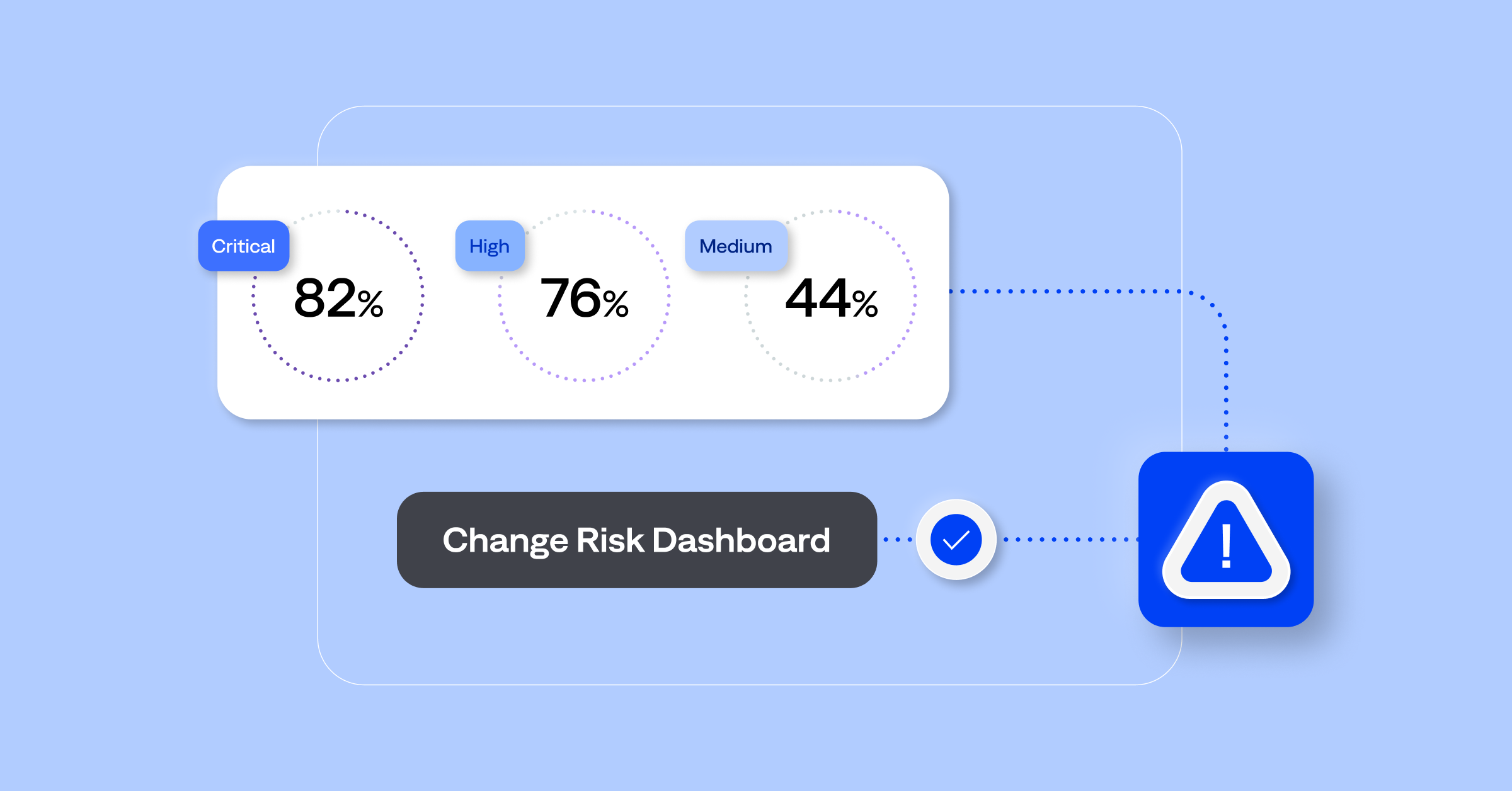
Every enterprise depends on continuous changes to its IT environment. New code releases, infrastructure updates, configuration changes, and security patches are all crucial to support continuous innovation. These same changes are also a leading source of operational risk and one of the most common causes of failures at the network, infrastructure, and software layers, resulting in outages.
IT environments are more distributed than ever, and releases keep coming faster. IT change management hasn’t kept up with the rapid pace of innovation. Traditional approaches, built for stable, simpler environments, are no longer enough to keep pace with today’s scale and complexity. The result? More outages, higher costs, and growing tension between speed and stability. Customers are experiencing this on a large scale, with one major insurer reporting that approximately half of its incidents were related to changes.
Our latest white paper, Derisking IT Change Management with Agentic AI, examines why the IT change management process is breaking down and how enterprises can modernize change risk management to prevent incidents and reduce downtime.
The growing challenges of IT change management
Modern IT organizations are executing changes at unprecedented volume and velocity, typically on a daily or weekly basis. The problem is that IT change management processes haven’t scaled with the accelerated speed of software delivery.
Most enterprises still rely on manual reviews, static questionnaires, and change advisory boards (CABs) to assess risk. For example, Albert Wong, Senior Cloud Engineer at Cardinal Health, recalls how they “used to export everything from ServiceNow into [Microsoft] Excel” and how “it took hours and relied heavily on manual judgment.”
These practices also rely on the flawed assumption that humans can reliably evaluate the blast radius of a change using limited context and fragmented data. The result of that assumption is outages and costly incidents.
There are other, hidden operational costs of the traditional IT change management process. Manual change reviews consume a significant amount of time from senior engineers and operations leaders. CAB meetings alone can absorb dozens of hours
each week, yet still fail to prevent incidents. Reviewers often lack visibility into service dependencies, historical incident patterns, or the reliability of the teams implementing changes.
The white paper presents a clear case: IT change management is no longer feasible at a human scale. No amount of process rigor or experience can compensate for the sheer volume of data and interdependencies that must be evaluated to manage change risk effectively.
Agentic AI can deliver proactive change risk management
To close this gap, enterprises must rethink their approach to IT change management. The answer isn’t more meetings or stricter controls, it’s automation powered by agentic AI.
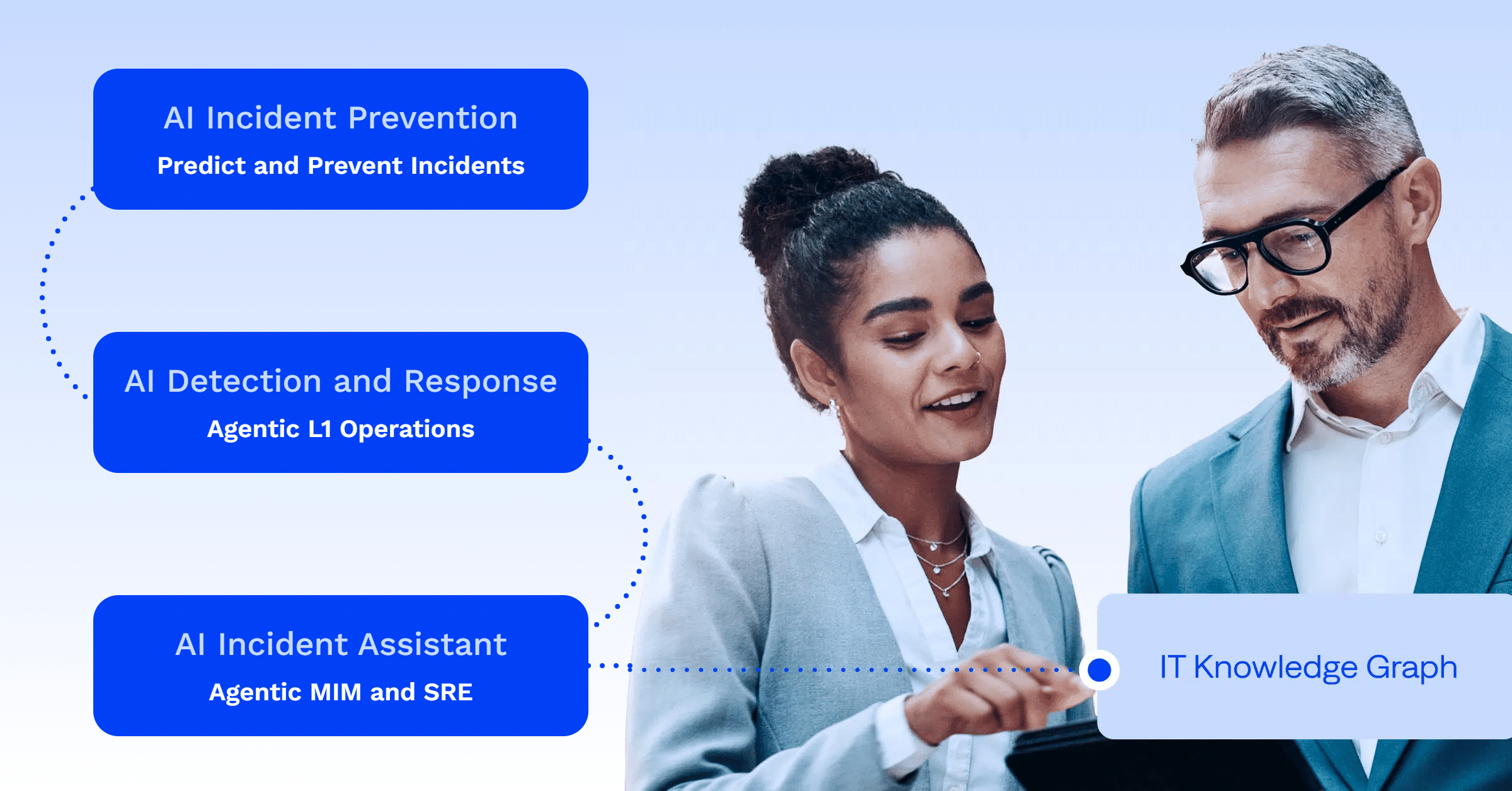
AI can process and analyze large volumes of data at a scale beyond the capacity of any human. It can identify risky changes and surface mitigation strategies before code is deployed to production. This technology marks a shift from reactive firefighting to predictive prevention, providing IT teams with the change intelligence to move faster, more safely, and strategically.
Agentic AI can analyze historical incident patterns, change records, and affected configuration items (CIs) to deliver clear, explainable risk scores and proactive action plans.
Agentic AI modernizes IT change management software by providing visibility, control, and automation where needed.
Advances in agentic AI now make it possible to:
- Analyze structured and unstructured data at scale, including change tickets, incident history, runbooks, and operational telemetry.
- Detect patterns and risk signals that are invisible to manual reviewers.
- Generate consistent, explainable change risk scores across thousands of changes.
- Recommend specific mitigation steps to minimize risk prior to implementation.
In addition to the research, customer examples, and benefits of agentic AI, the white paper outlines a practical feature checklist for IT change management tools that enterprises should evaluate when modernizing their change management processes
This checklist outlines where AI can have the greatest impact on various functionalities within an enterprise’s IT change management process. This guidance can help teams take the practical next step in implementing agentic AI for change risk management.
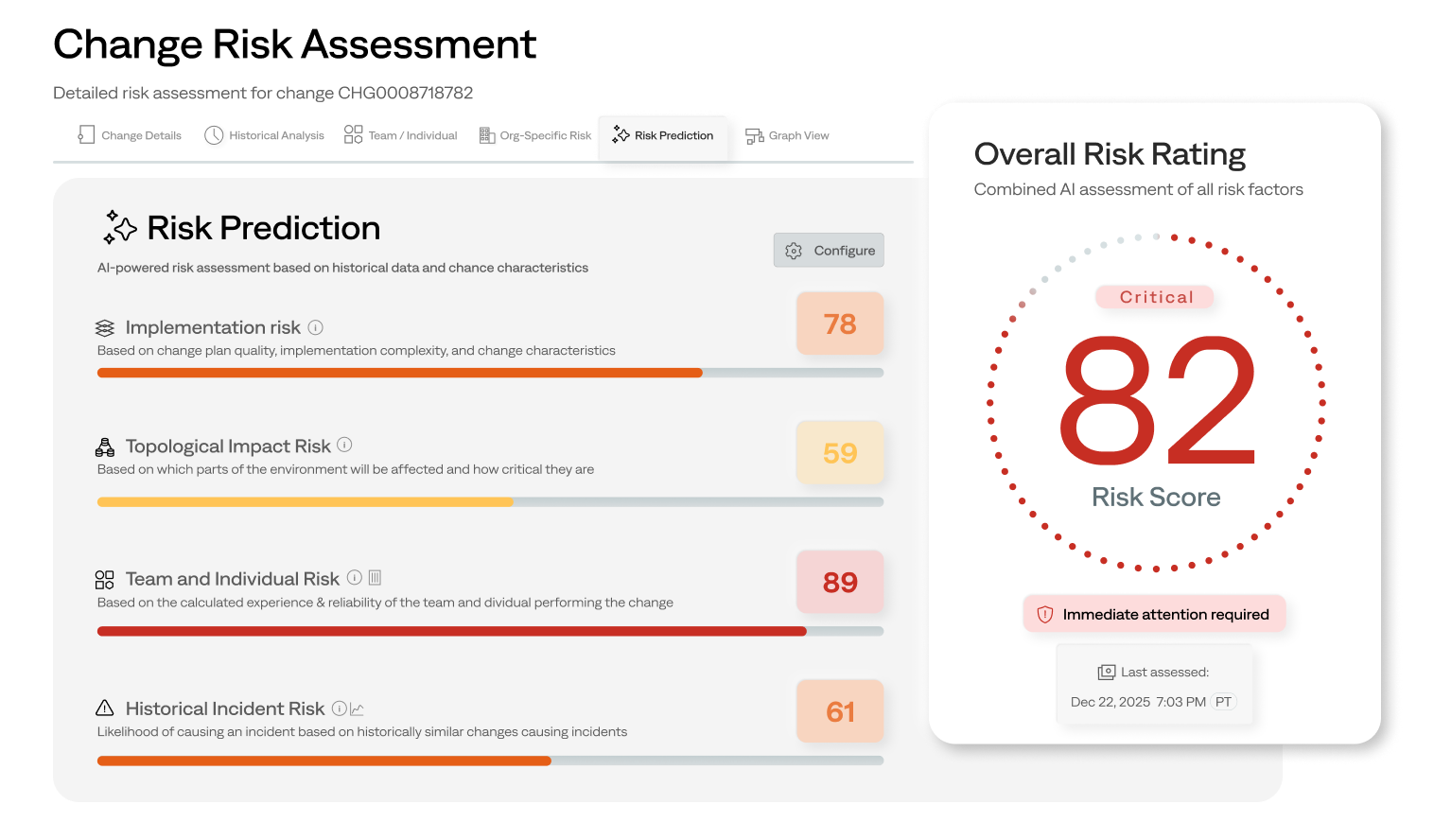
“The [AI and automation] technology gives us a much more accurate, data-driven assessment of changes versus relying on human judgment,” notes Wong. “It has made us much more effective and accurate in implementing changes, and frees up change managers to be hyper-focused on what really matters.”
Learn all the benefits of AI-powered IT change management
Modernizing IT change management is a necessity. As environments continue to grow in complexity, organizations that rely on manual processes will face increasing outages, higher costs, and slower innovation.
The Derisking IT Change Management with Agentic AI white paper demonstrates how agentic AI technology enables teams to predict and mitigate high-risk changes, prevent incidents, and maintain system stability. View the full paper today to learn:
- Why change-related incidents remain so pervasive and costly
- How AI and automation can transform change risk analysis at scale
- Which features matter most when evaluating IT change management tools
- How leading enterprises are shifting from reactive to proactive change management
If you’re responsible for reliability, uptime, or operational excellence, this white paper offers critical insights into the future of IT change management and how to get there.