





Benefits
- Improve efficiency: Harness AI-powered analysis to proactively prevent outages. Deliver seamless user experiences while keeping services up and running.
- Maximize system availability: Utilize a unified, full-context view of incidents to streamline collaboration across complex environments, detect issues more quickly, and maintain online operations.
- Meet compliance obligations: Demonstrate incident management compliance, identify potential risks earlier, and mitigate regulatory concerns across your organization.
- Modernize systems and workflows: Create a unified view of on-premises and cloud data sources to overcome CMDB gaps, eliminate data silos, and accelerate IT modernization.
People rely on healthcare organizations to deliver reliable essential services. Keeping systems online is more than a business priority; it’s a human priority.
Healthcare IT teams must ensure near-perfect uptime while managing complex systems and IT environments. Hybrid IT environments encompass a range of specialized cloud and on-premises tools, as well as numerous connected devices. Departments, sites, services, and tools often exist in silos. Meanwhile, manual incident management makes it difficult to deliver always-on services.
Organizations must meet regulatory compliance while migrating and modernizing systems as technology evolves.
- Availability requirements Outages that impact healthcare services can put patients’ trust and health at risk. Meeting SLAs is critical to avoid financial and regulatory penalties.
- Complex environments IT teams manage a mix of siloed tools, cloud services, and medical device systems that often require integration and modernization.
- Regulatory compliance Strict adherence to regulatory requirements is crucial to safeguard sensitive data and prevent legal and financial penalties.
How agentic AI transforms healthcare ITOps
Automating ITOps and incident management with agentic AI helps deliver reliable, compliant healthcare services to improve providers' experiences and business outcomes.
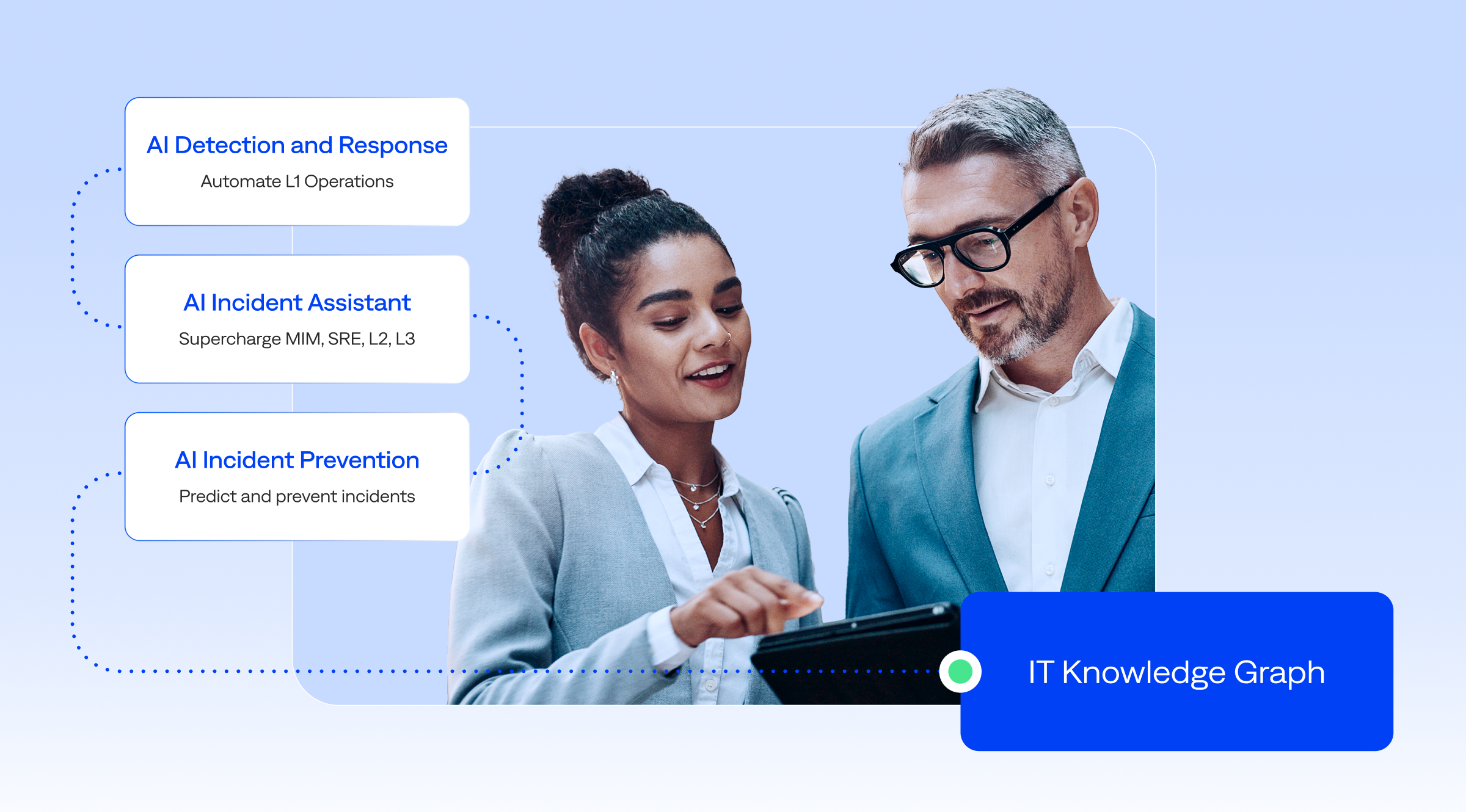
Agentic ITOps deliver the promised value of AIOps by providing operators with a consistent, unified, full-context view of incidents and their entire IT environment. With end-to-end visibility, teams can quickly detect, respond to, and prevent issues that reduce compliance risk and downtime.
Agentic ITOps unify data across internal and external sources with enterprise knowledge and AI-powered sensing. By eliminating data siloes, ITOps teams gain comprehensive visibility into all the information they need to make smart decisions. Faster detection and response help resolve incidents earlier, meet SLAs, and prevent disruptive and costly escalations.
Healthcare organizations also benefit from advanced analytics, providing teams with a holistic view of operations to identify risks early, ensure compliance, and avoid penalties. Advanced analytics can also identify opportunities to streamline operations and user experiences.
Modernization and digital transformation projects present challenges. AI changes the game because it doesn’t require highly structured inputs and can leverage all your messy, scattered data. The BigPanda IT Knowledge Graph is purpose-built to enable an AI-first data strategy by capturing your siloed data and using it to power insights and automation. Agentic ITOps for healthcare can also group sites and environments, providing a holistic view of specific areas within your networks.
With complete visibility of your technology stack, teams can confidently predict and prevent change-related outages, automate workflows, and maintain resilient operations.
“With BigPanda, we’ve automated our alert process by 83%, enabling root-cause identification of critical alerts within 30 seconds.”
Mark Peterson
Supervisor of IT Operations, Cambia Health Solutions
AI Detection and Response
Unified Analytics
AI Incident Assistant
Challenge
Business value
AI Detection and Response
Challenge
Business value
Unified Analytics
Challenge
Business value
AI Incident Assistant
Challenge
Business value
“BigPanda AIOps unifies operations and observability teams, their tools, data, and their processes so operators can understand, prioritize, and investigate every incident immediately.”
Jon Brown
Senior Analyst, Enterprise Strategy Group
