







The recent Cloudflare outage served as a stark reminder of how fragile the global digital ecosystem can be due to a single point of failure. In a matter of minutes, thousands of websites that rely on Cloudflare’s CDN, from Fortune 500 brands to SaaS platforms and consumer apps, went offline for hours. The business impacts were severe, with Shopify alone suffering over $4 million in losses while downstream merchant impacts potentially exceeded $170 million.
Just as notable as the outage itself was Cloudflare’s response. Within 24 hours, the company published a detailed postmortem outlining exactly what happened, why it happened, and what they were doing to prevent a recurrence. This transparency earned Cloudflare praise and credibility, and reassured customers, aligned stakeholders, and reflected a culture committed to accountability.
However, here’s the bigger takeaway for enterprises: this level of speed, clarity, and transparency in the aftermath of a major incident does not require heroics. It can and should be automated.
Setting a new standard with automated IT incident management
During a major IT incident, time simultaneously slows down and seems to evaporate. Internal responders are overwhelmed by chats, alerts, bridge calls, and dashboards. Executives expect immediate, recurring updates while IT, engineering, and reliability teams scramble to coordinate the right experts. Service desk and customer-facing teams need clear guidance. Customers demand to know what’s happening the moment the outage begins.
Cloudflare’s fast postmortem required executive involvement, rapid coordination, and manual stitching together of insights across teams and systems. For most enterprises, this process takes days or even weeks, due to inconsistent documentation, gaps in institutional knowledge, and fragmented teams.
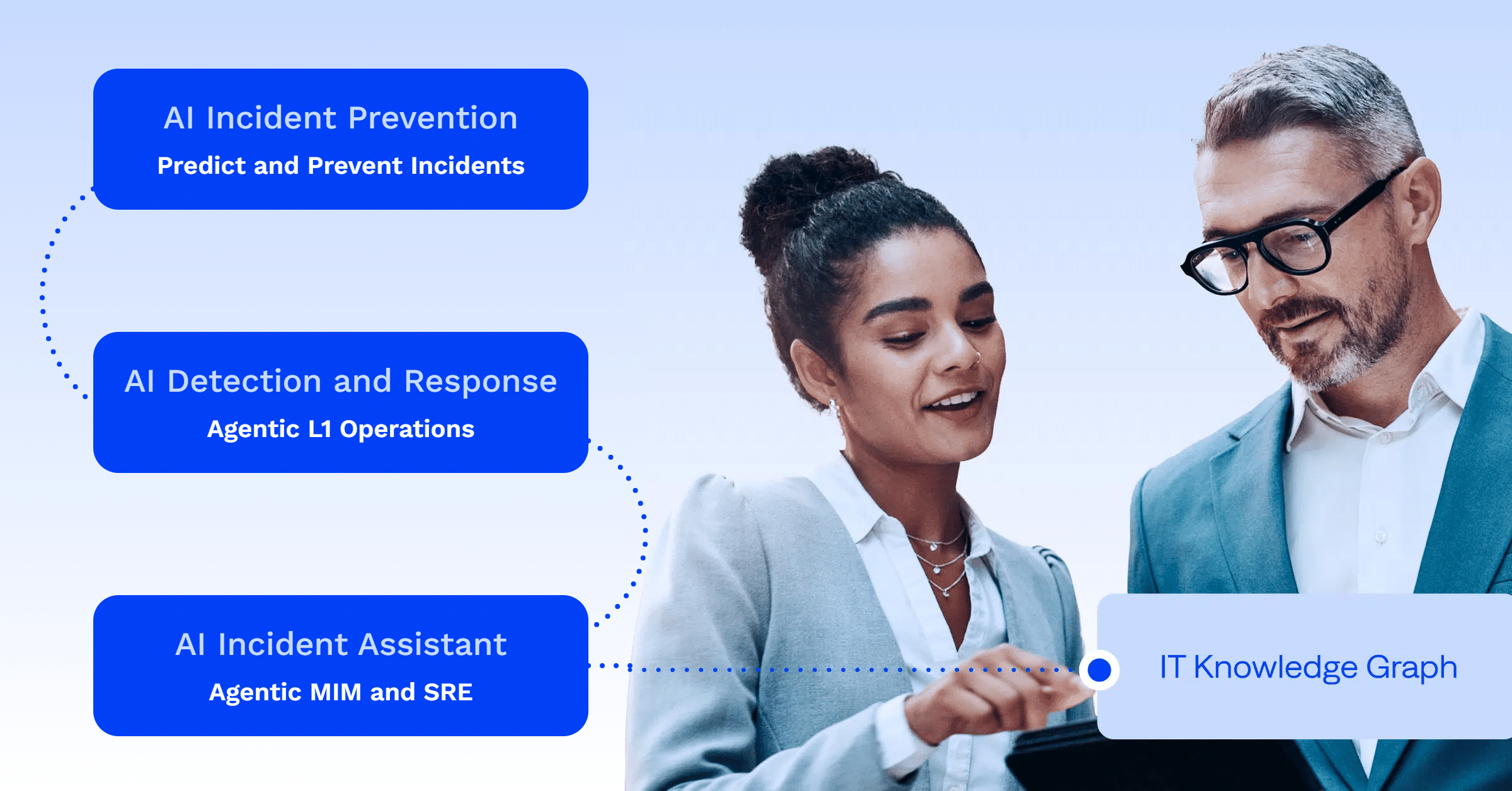
But with the BigPanda AI Incident Assistant (known as Biggy), this entire process can be automated in hours, not weeks or days.
Automating major IT incident management end-to-end
The AI Incident Assistant was designed for exactly these high-pressure moments. It transforms how teams investigate, respond to, communicate about, and learn from incidents. And it does so autonomously, across Slack and Teams, where teams are already working on incidents.
Here’s how the BigPanda AI Incident Assistant changes the game:
1. Real-time team and stakeholder updates: The AI Incident Assistant automatically orchestrates incident channels, engages on-call SMEs, and keeps every responder aligned with continuously updated summaries throughout the incident. No one needs to chase information. No one struggles to keep up. Updates are automatically sent to the right people at the right time.
2. Instant, executive-ready communications: Executives get concise, accurate, constantly refreshed incident updates directly in their collaboration tools, or easily packaged for sharing. The AI Incident Assistant highlights impact, affected services, actions taken, and next steps, ensuring leadership stays informed without pulling responders off the front lines.
3. Continuous, agentic troubleshooting: While responders search logs and dashboards manually, the AI Incident Assistant uses agentic AI to actively investigate across data, knowledge, and AI signals. This agentic investigation surfaces anomalies, correlates historical incidents, monitors patterns, pulls relevant dashboards, and suggests next troubleshooting steps. Teams get answers faster, with fewer escalations and less reliance on organizational knowledge.
4. Postmortems in hours, not days: Cloudflare impressed the industry by publishing a postmortem in under 24 hours. The AI Incident Assistant can create postmortem reports in a fraction of the time. By capturing relevant signals and telemetry, root cause indicators, investigation steps, decisions made, responder actions, and resolution paths, the AI Incident Assistant automatically produces complete executive summaries, after-action reviews, and postmortems. This eliminates the manual effort that typically drains days of responder time, and ensures every incident becomes a learning loop for future incidents. You can see what this looks like in this demo.
5. Automatically capture institutional memory: One of the biggest challenges highlighted in postmortem culture, including Cloudflare’s, is the loss of and inability to capture tacit knowledge. Biggy captures contextual insights from Slack and Teams chats, bridge call transcripts, and team actions that normally disappear once an incident ends. This creates lasting incident intelligence that your teams can reuse during future outages.
The time to automate IT incident management is now
If a global outage hit your business today, would you be ready to communicate with Cloudflare-level transparency without pulling your CEO onto the bridge?
The BigPanda AI Incident Assistant allows your enterprise to automate major incident management processes in a matter of hours. Doing so ensures:
- Executives stay informed.
- Response teams stay aligned.
- Customers get timely transparency.
- Root causes get documented quickly and accurately.
- Your brand earns trust, even during a crisis.
Enterprises have an opportunity right now to modernize their major incident processes with speed, automation, and accountability built in. And as the Cloudflare incident proved, this isn’t just an operational advantage, it’s a brand advantage.
The companies that automate incident management will be the ones customers turn to and trust most.
Reach out to our team, and we’ll review your current incident management goals and processes. The next time an issue arises, you’ll be able to deliver post-mortems within hours.